
You step on the scale Monday morning. It’s 4 pounds heavier than Friday. You didn’t overeat. You didn’t skip the gym. So what happened?
Chances are it’s water weight. And the good news? It’s not fat, it’s not permanent, and you can do something about it starting today.
In this guide I’ll walk you through exactly what water weight is, why your body holds onto it, and 12 science backed ways to lose water weight fast and safely. I’ll also cover how to lose water weight in 24 hours, how to flush out water weight in 3 days, and what to do after the water weight is gone because that’s the part most articles skip.
What Is Water Weight and Why Is Your Body Holding On to It?
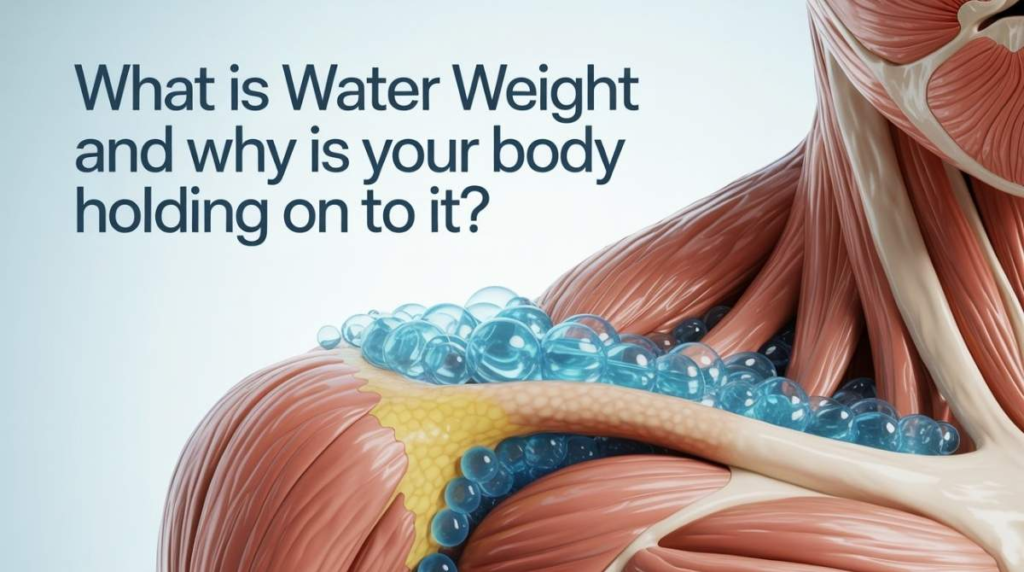
Your body is roughly 60% water. That water lives inside your cells, in your blood, in your tissues it’s doing important work everywhere. But sometimes, your body holds onto more fluid than it needs to. That extra fluid is what people call water weight, and it can add 2 to 10 pounds to the scale seemingly overnight.
Several things trigger this:
High sodium intake is the biggest one. When you eat salty foods such as a restaurant meal, processed snacks, or fast food your body pulls in extra water to balance the sodium concentration in your blood. The result? Puffiness, bloating, and a number on the scale that doesn’t reflect your actual fat.
Refined carbohydrates also play a role. Every gram of glycogen the form your body stores carbs in pulls about 3 to 4 grams of water with it. So a carb heavy day means more stored glycogen, which means more water stored alongside it.
Hormonal changes particularly during the days before menstruation cause many women to retain fluid due to shifts in estrogen and progesterone.
Stress and poor sleep raise cortisol, and cortisol signals the body to hold onto water and sodium.
Certain medications including anti inflammatories, blood pressure drugs, and corticosteroids can cause fluid retention as a side effect.
Understanding why your body is holding water is the first step to letting it go.
How to Lose Water Weight Fast: 12 Evidence Based Ways That Actually Work
1. Drink More Water Yes, Really
This sounds backwards, but it works. When you’re dehydrated, your body panics and holds onto every drop of fluid it can find. When you drink enough water consistently, your body gets the signal that it’s safe to let go of the stored fluid.
Aim for at least 2 to 3 litres per day. If you’re exercising or in a hot climate, you need more. A good rule: your urine should be pale yellow not dark and not completely clear.
Not sure how much water YOUR body needs? Use our Water Intake Calculator to get a personalised daily target based on your weight, height, and activity level.
2. Cut Back on Sodium But Don’t Obsess Over It
The average person consumes around 3,400 mg of sodium per day. The recommended limit is under 2,300 mg. That gap is where a lot of water retention lives.
You don’t need to go salt free. You need to be smarter about where the salt comes from. The biggest sources are:
Packaged and processed foods
Restaurant and takeaway meals
Canned soups and sauces
Bread and cereals often surprisingly high in sodium
Switch to whole foods for even a few days and most people see visible results less puffiness in the face, less bloating in the stomach, and a lower number on the scale.
3. Eat More Potassium Rich Foods
Potassium and sodium work against each other in your body. When potassium goes up, sodium and the water it holds goes down. This is one of the fastest and most natural ways to flush excess fluid.
Foods high in potassium:
Bananas
Sweet potatoes
Avocados
Spinach and leafy greens
Lentils and beans
Salmon
You don’t need a supplement for this just eat more of these foods regularly. Your kidneys will do the rest.
4. Temporarily Reduce Refined Carbohydrates
If you want to lose water weight quickly especially in the stomach area reducing refined carbs for a few days is one of the fastest ways to do it.
Remember: each gram of glycogen holds 3 to 4 grams of water. Drop the glycogen, and the water follows. This is why people on low carb diets often lose 3 to 5 pounds in the first week it’s mostly water, not fat.
Refined carbs to reduce temporarily:
White bread and pasta
White rice
Sugary drinks and desserts
Breakfast cereals
This doesn’t mean go full keto forever. Even a few days of eating more protein, vegetables, and fewer processed carbs will make a visible difference.
5. Move Your Body Every Day
Exercise makes you sweat and sweat is water leaving your body. But beyond sweating, movement improves your lymphatic circulation the system responsible for draining excess fluid from tissues and reduces inflammation.
You don’t need to run a marathon. A 30 minute walk, a yoga session, or a light workout is enough to get things moving. Even just standing and walking around instead of sitting all day makes a difference.
6. Add Some Resistance Training
Here’s something most people don’t know: muscle tissue needs glycogen to function, and glycogen holds water. But when you build more muscle through resistance training, your body actually becomes better at managing fluid balance over time it distributes water more efficiently into the muscle rather than letting it pool in the wrong places.
Short term, a good strength training session will also cause you to sweat and use stored glycogen, which reduces water retention. Win win.
7. Prioritise Sleep Seriously
Sleep deprivation raises cortisol, which raises aldosterone a hormone that tells your kidneys to retain sodium and water. One bad night of sleep won’t ruin you, but consistently sleeping less than 7 hours a night is one of the most overlooked causes of chronic water retention.
Good sleep also improves insulin sensitivity, which helps your body manage glycogen storage more efficiently less glycogen means less water stored with it.
Target 7 to 9 hours per night. If sleep is a struggle, start by keeping a consistent wake up time every day even on weekends. That single habit anchors your circadian rhythm faster than almost anything else.
8. Manage Your Stress Levels
Stress triggers cortisol. Cortisol tells your body to hold onto sodium. Sodium holds water. That’s the chain.
Chronic stress is one of the most underrated causes of persistent water retention especially the kind that sits in the face, stomach, and ankles. If you’re doing everything else right and still feeling puffy, stress may be the missing piece.
Some evidence based ways to lower cortisol:
10 to 20 minutes of daily meditation or deep breathing
Reducing caffeine after midday
Stepping outside for a walk in fresh air and natural light
Journalling or talking through what’s stressing you
9. Try Natural Diuretics Carefully
Certain foods and drinks naturally encourage your kidneys to excrete more fluid:
Dandelion tea or supplements one of the best studied natural diuretics
Coffee and green tea mild diuretic effect plus antioxidants
Cucumber, celery, and asparagus high water content and natural diuretic properties
Magnesium especially helpful for women experiencing pre menstrual water retention
The carefully part: don’t overdo it, don’t combine multiple diuretics, and don’t rely on these if you have kidney or heart conditions. And always increase your water intake alongside them you don’t want to get dehydrated.
10. Support Your Digestive System
Constipation and sluggish digestion contribute to bloating and the feeling of being heavier than you are. While this isn’t water weight in the classic sense, it absolutely affects how you look and feel.
Fibre, fermented foods such as yogurt, kefir, and kimchi and proper hydration keep things moving. A healthy gut also reduces systemic inflammation, which plays a role in fluid retention.
11. Account for Hormonal Shifts
If you’re a woman and you notice the scale jumping 2 to 5 pounds in the week before your period, that’s completely normal. Estrogen and progesterone fluctuate in the luteal phase and cause the body to retain extra fluid temporarily.
This isn’t something you can completely eliminate nor should you try to. The best approach is understanding your cycle, not panicking about the scale changes, and focusing on the habits above consistently throughout the month. The water weight will drop naturally once your period starts.
12. Check Your Medications and Underlying Health
If you’ve done everything above and still struggle with persistent fluid retention especially swelling in your ankles, legs, or hands it’s worth looking deeper. Some medications cause fluid retention as a documented side effect, including:
NSAIDs such as ibuprofen
Calcium channel blockers blood pressure medications
Corticosteroids
Certain antidepressants
And in some cases, persistent oedema fluid retention can signal an underlying issue with the kidneys, heart, thyroid, or lymphatic system. If you’re concerned, see a doctor don’t just push through it.
What Is the Fastest Way to Flush Water Weight?
The fastest way to reduce temporary water weight is to get your daily habits back into balance rather than trying to dehydrate yourself. Focus on drinking enough water, cutting back on excessive sodium, reducing highly processed carbohydrates for a short period, staying active, and getting enough sleep.
If your water retention came from a salty meal, a higher-carb day, hormonal changes, or several days of disrupted routines, the scale may begin moving back toward normal once those factors settle down.
Do not try to speed things up by severely restricting water, using water pills without medical advice, or deliberately sweating until you are dehydrated. A lower number on the scale is not worth putting your hydration and electrolyte balance at risk.
So How Fast Does Water Weight Actually Come Off?
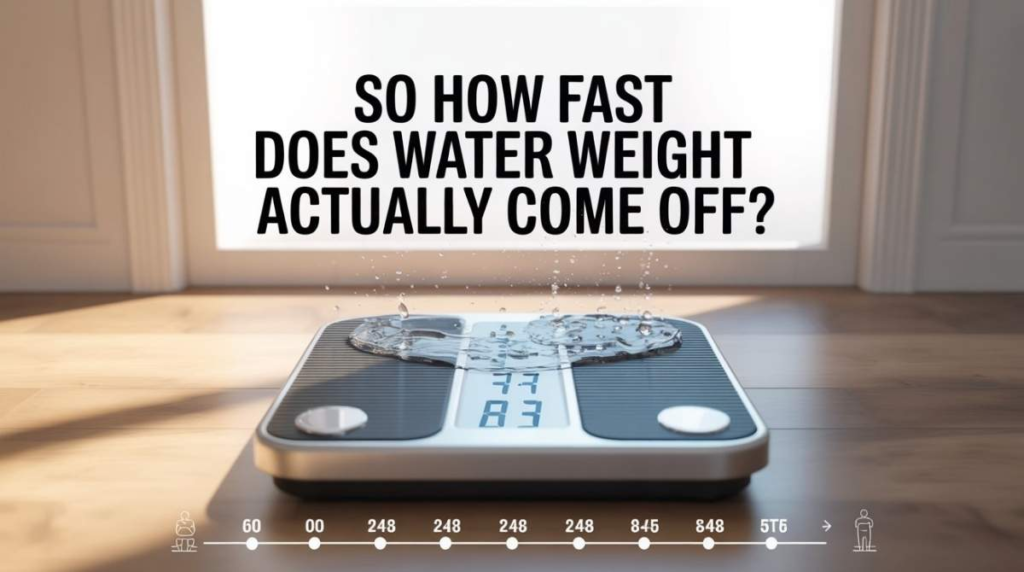
Here’s the honest answer: most water weight drops within 1 to 5 days when you make the right changes.
Reduce sodium and drink more water: results often visible in 24 to 48 hours
Cut refined carbs: noticeable change within 2 to 3 days
Improve sleep and manage stress: takes a few days to a week
How to Lose Water Weight in 24 Hours
If you want to reduce temporary water retention within a day, focus on simple changes rather than extreme measures.
Start by drinking water regularly throughout the day. Keep salty processed foods, fast food, and heavily seasoned meals to a minimum. Choose simple meals with vegetables, protein, fruit, and moderate portions of carbohydrates.
A walk or your normal workout can also help you stay active and may reduce some temporary fluid through normal sweating. Finish the day with a good night’s sleep instead of trying to stay awake or restrict food and water.
You may notice the scale is lower the next morning, but there is no guaranteed amount of water weight you can lose in 24 hours. A rapid change is usually a combination of fluid, food volume, and normal day-to-day fluctuations, not several pounds of body fat.
How to Lose 4 Pounds of Water Weight in 3 Days
Losing four pounds on the scale in three days may happen for some people when temporary water retention decreases, but it should not be treated as a guaranteed result.
For the three days, keep your routine simple and consistent. Reduce highly salty foods, drink water normally, eat fewer highly processed carbohydrates, include potassium-rich foods in your meals, stay physically active, and prioritize sleep.
You can use a simple approach:
Day 1: Reduce excessive sodium, stay hydrated, and get some movement.
Day 2: Continue with balanced meals, include foods such as bananas, spinach, potatoes, or avocado, and maintain your normal activity.
Day 3: Keep the same routine rather than adding more restriction. Compare your weight under similar conditions, preferably in the morning.
If the scale drops several pounds, remember that the change is likely to include water and other temporary fluctuations. It does not mean you lost four pounds of body fat.
Can You Lose 20 Pounds of Water Weight?
A 20-pound drop in water weight is not a normal short-term target and should not be something you try to force.
The amount of fluid a person retains can vary, but a very large or sudden change in weight may have causes that go beyond an ordinary salty meal or temporary bloating. Trying to create a dramatic drop by severely restricting water, taking diuretics, or deliberately dehydrating yourself can be dangerous.
If you suddenly gain or lose a large amount of weight, especially when you also have noticeable swelling, shortness of breath, or other unusual symptoms, speak with a healthcare professional rather than trying to manage it yourself.
How quickly can you lose water weight in a day?
Focus on sodium reduction, increase water intake significantly, do a 30 minute sweat inducing workout, and sleep well. You can realistically drop 2 to 4 pounds of water weight overnight with these combined.
How Do You Know If You’re Losing Water Weight?
Water weight often changes much faster than body fat. If the scale moves noticeably over a day or two, especially after a salty meal, a high-carbohydrate day, hormonal changes, or a change in your usual routine, some of that difference may be water.
You may also notice that your face looks less puffy, your stomach feels less bloated, or rings and shoes fit more comfortably.
Signs It May Be Water Weight
Some common clues include:
- A noticeable change on the scale within a short period
- Puffiness or temporary bloating
- Rings, watches, or shoes feeling tighter
- A recent increase in salty foods
- Eating considerably more carbohydrates than usual
- Hormonal changes around your menstrual cycle
- A change after returning to your usual eating habits
These signs can suggest fluid is contributing to the change, but they cannot tell you exactly why your body is retaining water. Persistent or unexplained swelling should be checked by a healthcare professional.
What to Do After You Lose Water Weight
Once the extra water is gone, the goal should not be to keep forcing the scale lower. Your body naturally needs water, sodium, carbohydrates, and other nutrients to function normally.
Instead of continuing an aggressive short-term approach, return to habits that you can maintain.
Return to a Balanced Diet
Bring a variety of foods back into your meals, including protein, vegetables, fruits, whole grains, healthy fats, and appropriate portions of carbohydrates.
You do not need to keep following an extremely restrictive diet just because it produced a temporary drop on the scale.
Keep Drinking Water Normally
Do not reduce your water intake to try to maintain a lower number.
Your weight will naturally fluctuate as your hydration, food intake, activity, and other factors change. Staying properly hydrated is more important than trying to keep your scale weight artificially low.
Don’t Keep Restricting Sodium or Carbohydrates
Reducing excessive sodium and highly processed foods can be useful, but completely eliminating salt or carbohydrates is not necessary for most people.
Instead, aim for a balanced diet with reasonable portions and fewer heavily processed foods.
Focus on Sustainable Fat Loss
If your real goal is to lose body fat, water-weight strategies should only be viewed as a short-term adjustment, not the main plan.
Long-term fat loss comes from sustainable eating habits, regular physical activity, adequate sleep, and a calorie intake that supports gradual progress. A temporary drop in water weight can make the scale move quickly, but maintaining healthy habits is what creates lasting results.
Water Weight vs Fat Loss: What You Actually Need to Know
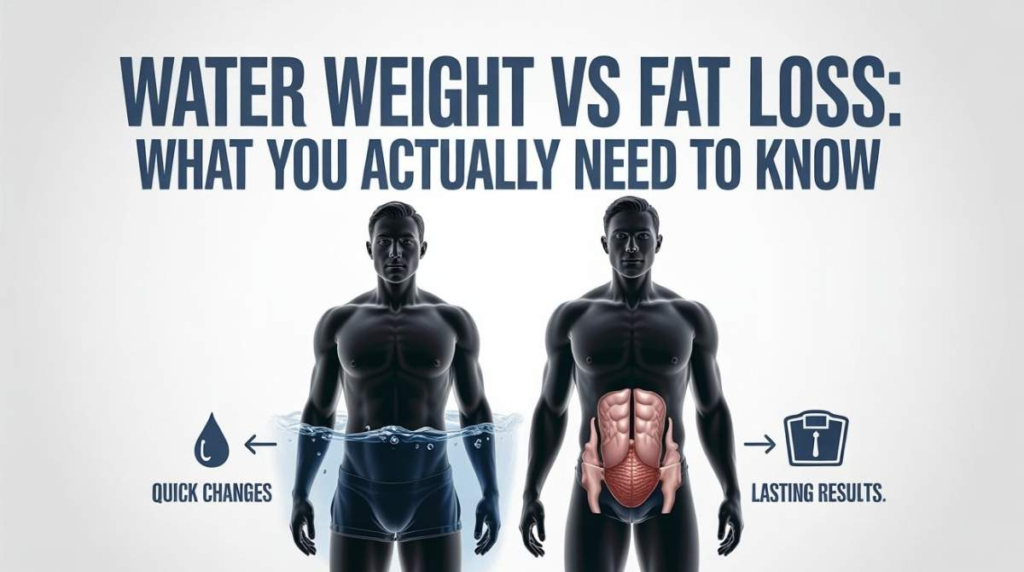
Water weight loss is real but temporary. Eat a salty meal, have a high-carb day, or go through a stressful week and the water comes right back. That’s not a failure, that’s just how the body works.
Fat loss is different. It happens when you eat fewer calories than your body burns, and that kind of loss is permanent. To lose 1 pound of fat per week you need a daily deficit of around 500 calories.
The good news is that both often happen together. When you clean up your diet and cut refined carbs, you naturally drift into a calorie deficit at the same time.
But to make fat loss intentional, you need to know your actual number. Use our free Calorie Calculator to get your personalised daily calorie target and pair it with the habits in this guide for results that actually last.
Frequently Asked Questions
How do you get rid of water weight fast?
The fastest combination: drink more water, drastically reduce sodium, cut refined carbs for 2 to 3 days, do a sweaty workout, and sleep 7 to 8 hours. Most people see a 2 to 5 pound drop within 24 to 48 hours.
How can I flush my water weight in 24 hours?
Start your morning with a large glass of water. Eat clean, whole foods with no added salt all day. Do at least 30 minutes of moderate to vigorous exercise. Eat potassium rich foods like avocado, banana, and spinach. Go to bed on time. The combination of hydration, movement, and sodium reduction is the fastest natural approach.
How to lose water weight in 3 days?
Day 1 cut sodium, drink more water, and add a workout. Day 2 eat potassium-rich foods, reduce carbs, and sleep well. Day 3 keep going and add a natural diuretic like dandelion or green tea. Most people drop 3 to 5 pounds by day 3.
How do I know if it’s water weight?
The scale moved a lot overnight, you feel puffy or bloated, rings or shoes feel tighter, and the gain lines up with a salty meal, high carb day, hormones, or stress. Real fat gain happens slowly, around 0.25 to 0.5kg per week at most.
Can I lose water weight and fat at the same time?
Yes and it’s the best approach. Cut sodium, reduce refined carbs, stay active, and eat in a small calorie deficit and you tackle both at once. Use our Calorie Calculator to get your daily target and make progress on both fronts.