
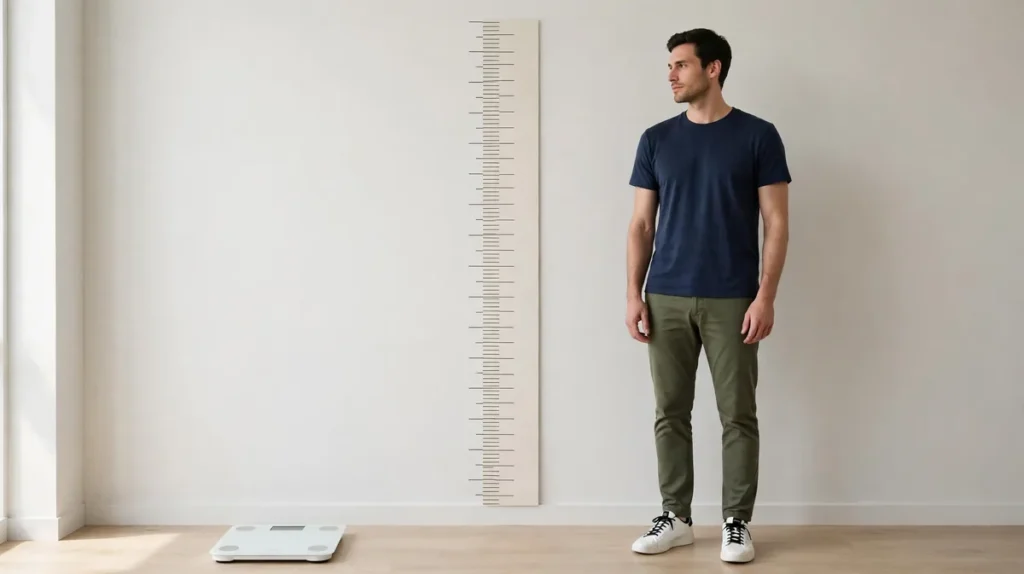
The proper weight for a 6 foot male is approximately 136 to 184 pounds (62 to 83 kg). That is the healthy weight range for a man who is 6 feet (72 inches) tall, based on a Body Mass Index (BMI) of 18.5 to 24.9, the range the CDC classifies as healthy weight for adults.
There is no single “correct” number. Where you should sit inside that range depends on your frame, how much muscle you carry, your waist size, and your age. This guide shows you the full chart, exactly how the range is calculated, and how to work out which part of it fits your body.
The Proper Weight for a 6 Foot Male at a Glance
| BMI Category | BMI Range | Weight for a 6 Foot Male |
|---|---|---|
| Underweight | Below 18.5 | Below 136 lb (62 kg) |
| Healthy weight | 18.5 to 24.9 | 136 to 184 lb (62 to 83 kg) |
| Overweight | 25.0 to 29.9 | 185 to 221 lb (84 to 100 kg) |
| Obesity | 30.0 and above | 221 lb (100 kg) and above |
These categories come from the CDC’s adult BMI categories, which apply to adults aged 20 and over. BMI is a screening measure, not a diagnosis, the CDC itself notes that it does not measure body fat directly, which is why the sections below on muscle and waist size matter.
Not sure where your own number falls? Enter your height and weight into our BMI calculator and you will get your category instantly.
How This Range Is Calculated
The healthy range is not a guess, it comes straight from the BMI formula:
BMI = 703 × weight (lb) ÷ height (inches)²
For a 6 foot man, height is 72 inches, and 72² is 5,184. Working backwards from the healthy BMI limits:
- Lower limit: 18.5 × 5,184 ÷ 703 = about 136 lb
- Upper limit: 24.9 × 5,184 ÷ 703 = about 184 lb
That is the entire calculation. Any source that gives a very different “healthy range” for a 6 foot man without showing this math is worth treating with caution, published figures online vary widely, and some are simply wrong. If you want to test the numbers for a different height or weight, the same BMI calculator does this arithmetic for you.
Worked example: a man who is exactly 6 feet tall (72 inches) and weighs 180 pounds has a BMI of 703 × 180 ÷ (72 × 72) = 24.4, which sits inside the healthy range, near its top end, but still inside it.
Where in the Range Should You Be? Frame Size and Build
A range of nearly 50 pounds is wide, and your build explains most of it.
- Small frame: You will usually sit naturally toward the lower part of the range, roughly 140 to 160 lb.
- Medium frame: The middle of the range, roughly 155 to 175 lb, suits most men.
- Large frame: Broader bones and a naturally bigger build place you toward the upper part, roughly 170 to 184 lb, without that weight being excess fat.
Two traditional formulas doctors have used for decades to estimate a single “ideal” weight land in the same middle ground. The Devine formula gives about 171 lb for a 6 foot man, and the Hamwi formula gives about 178 lb. Treat these as rough mid range reference points, not targets you must hit exactly, the BMI range, your waist, and how you feel and perform are more useful guides.
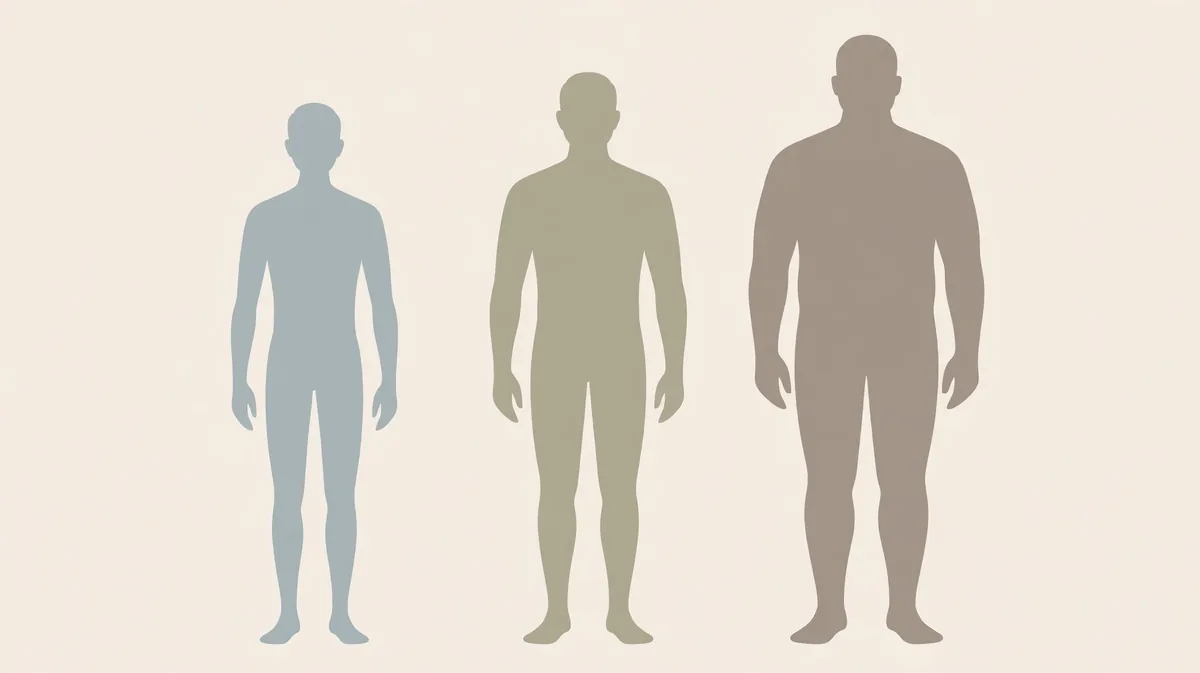
Over 184 Pounds but Muscular? When BMI Gets It Wrong
BMI has one well known blind spot: it cannot tell muscle from fat. Muscle is denser than fat, so a 6 foot man who lifts weights seriously can weigh 195 or 205 lb, land in the “overweight” category on paper, and still be lean and healthy.
If that sounds like you, judge your weight with two extra checks instead of the scale alone:
1. Waist circumference. Fat stored around the abdomen carries more health risk than fat elsewhere. According to guidance from the National Heart, Lung, and Blood Institute (NHLBI), a waist circumference above 40 inches (102 cm) in men is associated with a higher risk of heart disease and type 2 diabetes, whatever the BMI says. A muscular man above 184 lb with a 34 inch waist is in a very different position from a man of the same weight with a 42 inch waist. You can check your proportions with our waist to height ratio calculator, keeping your waist under half your height is a practical rule of thumb.
2. Body fat percentage. The American Council on Exercise (ACE) classifies men’s body fat roughly as: athletes 6 to 13%, fitness 14 to 17%, average 18 to 24%, and obese 25% and above. A 6 foot man at 200 lb with 12% body fat is lean; at 28% body fat, the same 200 lb is a genuine concern. Our Navy body fat calculator estimates yours from simple tape measurements, and the lean body mass calculator shows how much of your weight is muscle and other lean tissue.
The honest summary: BMI is the right starting point for most men, and the wrong final word for very muscular ones.

Does Age Change the Proper Weight?
The official BMI categories do not change with age, 136 to 184 lb is the healthy range whether you are 25 or 65. But two age related points are worth knowing.
First, men naturally lose muscle as they age, so the same weight at 60 usually contains more fat and less muscle than it did at 30. Staying in range matters, but what the weight is made of matters more with each decade. Keeping muscle through resistance training and adequate protein protects you far more than chasing the lowest possible number.
Second, some published research discussed in medical commentary suggests that for adults over 65, the lowest health risks are sometimes observed toward the middle and upper part of the healthy BMI range rather than the very bottom, one reason doctors are often cautious about aggressive weight loss in older men. This is an area of ongoing research rather than a settled rule, so if you are over 65, treat the upper middle of the range as perfectly reasonable and discuss any major weight change with your doctor.
What to Do If You Are Outside the Healthy Range
If you weigh more than 184 lb (and the muscle checks above say it is not mainly muscle), the practical target is your daily calorie intake. Weight loss comes down to eating modestly fewer calories than you burn. Our calorie calculator estimates how many calories you need each day to maintain, lose, or gain weight at your height, weight, and activity level, and the TDEE calculator shows your total daily energy expenditure in more detail. Steady, moderate changes you can keep up beat crash diets.
If you weigh less than 136 lb, the same calculators work in reverse: they show the calorie surplus you would need to gain gradually. Persistent, unexplained weight loss, or being underweight without understanding why, is a reason to see a doctor rather than just eat more, because it can occasionally signal an underlying health issue.
And a general rule for both directions: if you have a medical condition, take medication that affects weight, or plan a large weight change, talk to a healthcare professional first. Online calculators and charts, this one included, give you screening information, not personal medical advice.

Frequently Asked Questions
Is 200 lb overweight for a 6 foot man?
By BMI, yes, 200 lb at 6 feet gives a BMI of about 27.1, inside the overweight category. The exception is the muscular case described above: if your waist is well under 40 inches and your body fat is in the athletic or fitness range, that label may not reflect your actual health.
Is 150 lb too light for a 6 foot man?
No. At 150 lb your BMI is about 20.3, comfortably inside the healthy range, toward the lower middle, which is typical for a smaller frame or a lean build.
What is the average weight of a 6 foot man, and is average the same as healthy?
No, average and healthy are different ideas. The average describes what men actually weigh, and in many countries the average adult man weighs more than the healthy range for his height. The 136 to 184 lb range in this article is the medically defined healthy range, not a statistical average, and it is the better target to aim for.
Does this range apply to a 6 foot teenager?
No. Children and teenagers are assessed with BMI for age percentiles, not the adult categories, because their bodies are still growing. Use our child’s BMI calculator for anyone under 20.
Conclusion
For a 6 foot male, the proper weight is a healthy range of 136 to 184 pounds, not one magic number. Your frame decides where in that range you naturally belong, muscle and waist size refine the picture, and the final check takes ten seconds: run your own numbers through the BMI calculator and see exactly where you stand.
Disclaimer: This tool is for educational and informational purposes only and is not a substitute for professional medical advice, diagnosis, or treatment. Always consult a qualified healthcare professional with any questions about your health.

Taha Rasheed is a content researcher and editor at UnlimitedCalculators.com. He is passionate about making everyday calculations easier and more accessible through simple, practical, and easy-to-understand online tools.
He focuses on researching calculation methods, creating helpful content, and improving the clarity and usability of calculator resources across different topics, including mathematics, finance, education, health, and everyday calculations.
At UnlimitedCalculators.com, Taha aims to provide useful, informative, and user-friendly resources that help visitors understand calculations and make everyday tasks simpler.