
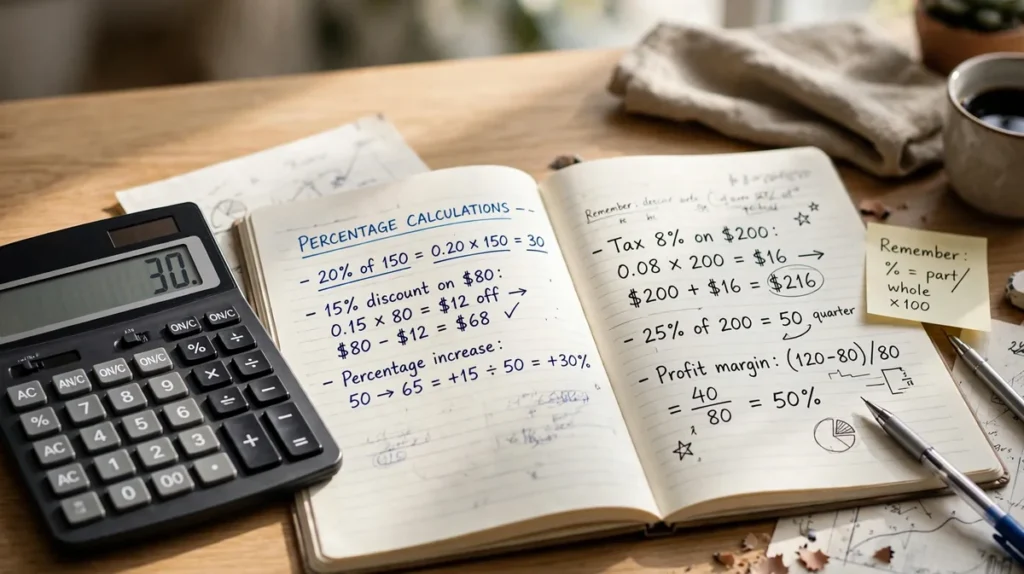
To calculate the percentage increase between two numbers, subtract the original number from the new number, divide the result by the original number, and multiply by 100. That is the whole method: (New − Original) ÷ Original × 100. The one detail people get wrong is the middle step, because the division always uses the original number, never the new one. This guide works through real examples, then shows the two traps behind almost every wrong answer.
The Three Steps

- Find the change. New number minus original number.
- Divide by the original number. Not the new number, not the average of the two. The original.
- Multiply by 100 to turn the decimal into a percentage.
Keep those three steps in order and every percentage increase problem becomes the same problem.
Worked Examples

A price rises from $80 to $100. Change: 100 − 80 = 20. Divide: 20 ÷ 80 = 0.25. Multiply: 0.25 × 100 = 25 percent increase.
A salary rises from $3,000 to $3,450 a month. Change: 450. Divide: 450 ÷ 3,000 = 0.15. So a 15 percent increase.
Rent rises from $1,200 to $1,320. Change: 120. Divide: 120 ÷ 1,200 = 0.10. So a 10 percent increase.
An audience grows from 2,500 to 4,000 followers. Change: 1,500. Divide: 1,500 ÷ 2,500 = 0.60. So a 60 percent increase.
| From | To | Change | Percentage increase |
|---|---|---|---|
| $80 | $100 | $20 | 25 percent |
| $3,000 | $3,450 | $450 | 15 percent |
| $1,200 | $1,320 | $120 | 10 percent |
| 2,500 | 4,000 | 1,500 | 60 percent |
Working one by hand is the best way to learn it. For a quick answer on your own numbers, enter the two values once and read the result.
Trap 1: Dividing by the New Number

The most common mistake in this calculation is dividing the change by the new number. Take the price example: 80 rising to 100. Dividing the change of 20 by the new number, 100, gives 20 percent. It looks plausible, and it is wrong. The correct answer is 25 percent, because growth is measured against where you started, not where you ended.
You will find this mistake in published articles, in spreadsheets, and in business reports, because the wrong version still produces a tidy looking number. Whenever a percentage increase feels surprisingly small, check the denominator first. Nine times out of ten, that is where the error lives.
Trap 2: Percentage Points Are Not Percent
When both numbers are themselves percentages, two different answers are both correct, and mixing them up causes real confusion. Suppose an interest rate rises from 4 percent to 6 percent.
The simple gap is 2, and that is reported as 2 percentage points. But the increase relative to the starting rate is 2 ÷ 4 = 0.5, a 50 percent increase in the rate itself.
News reports swap these constantly. A rate that rose by 2 percentage points sounds small; the same event described as a 50 percent increase sounds dramatic. Whenever you see a percentage change about a percentage, ask which of the two is meant. For the calculation in this article, percentage increase between two numbers, the relative version is the answer: divide the gap by the original rate.
When the Second Number Is Smaller: Decreases and a Surprise
The same formula handles decreases; the result simply comes out negative, and we report it as a percentage decrease. A price falling from $100 to $80: change is minus 20, divided by the original 100, giving a 20 percent decrease.
Now notice something genuinely surprising. Rising from 80 to 100 is a 25 percent increase. Falling back from 100 to 80 is a 20 percent decrease. The same twenty dollars, described two ways, gives two different percentages, because each calculation measures against a different starting point. This asymmetry is real mathematics, not a trick, and it explains why a product discounted by 20 percent needs a 25 percent rise to return to its old price.
Two Shortcuts Worth Knowing
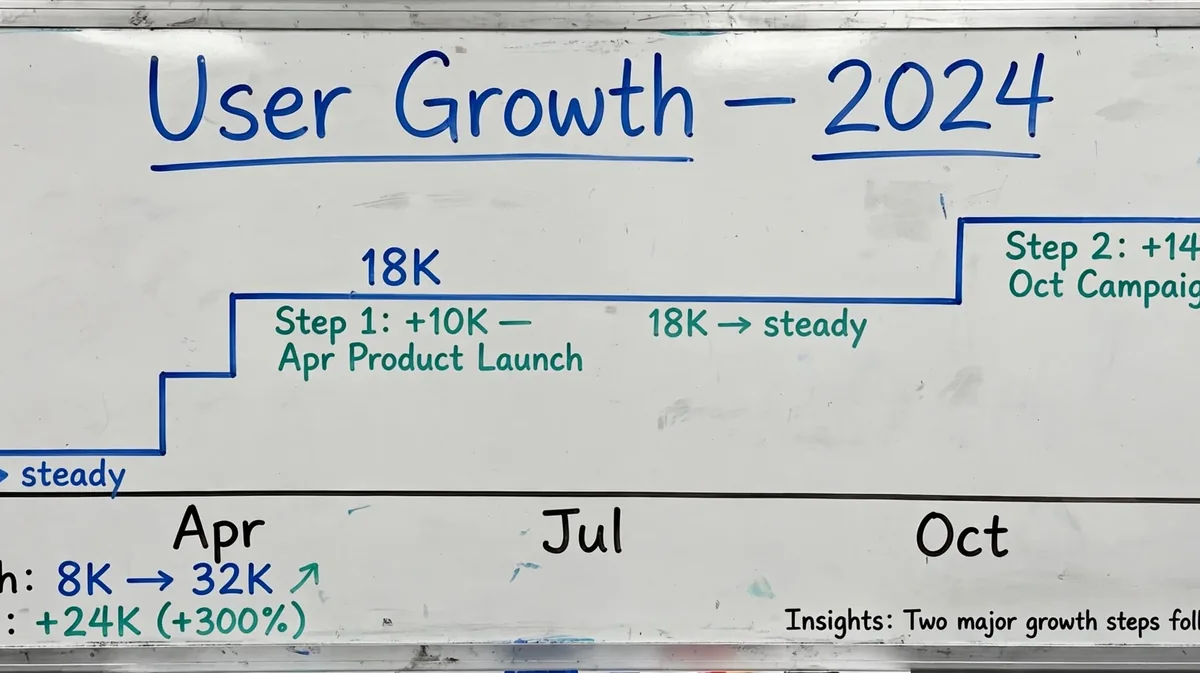
The multiplier shortcut. Increasing a number by a percentage is the same as multiplying it by 1 plus that percentage as a decimal. A 25 percent increase means multiplying by 1.25: 80 × 1.25 = 100. A 10 percent increase means multiplying by 1.10. This is the fastest way to find the new value when you already know the percentage.
Sequential increases compound. Two increases in a row do not add together. A price that rises 10 percent and then another 10 percent goes from 100 to 110 to 121, which is a 21 percent total increase, not 20. The second rise acts on the larger base. The same compounding drives savings growth over time.
Frequently Asked Questions
What is the formula for percentage increase?
Percentage increase = (New number − Original number) ÷ Original number × 100. Subtract to find the change, divide the change by the original number, then multiply by 100. The original number is always the denominator.
How do I calculate percentage increase in price?
Use the same three steps with the old price as the original number. A jacket rising from $80 to $100 increased by 20 ÷ 80 = 25 percent. If you know only the new price and the increase percentage, divide the new price by 1 plus the percentage as a decimal to recover the original price: 100 ÷ 1.25 = $80.
Can a percentage increase be more than 100 percent?
Yes. An increase above 100 percent means the number more than doubled. Growing from 50 to 120 is a change of 70, and 70 ÷ 50 = 1.4, a 140 percent increase. Increases have no ceiling, unlike decreases, which cannot pass 100 percent without the number going negative.
What if the original number is zero?
The formula cannot handle an original value of zero, because dividing by zero is undefined. Going from 0 to any positive number is sometimes described informally as an infinite increase, but the honest answer is that percentage increase from zero is not defined. Report the absolute change instead.
Conclusion
Percentage increase between two numbers is one formula used with care: subtract, divide by the original, multiply by 100. Keep the original number in the denominator, keep percentage points separate from percent, and remember that the way down uses a different base than the way up. With those three habits, you will get this calculation right every time, including when published sources get it wrong.

Taha Rasheed is a content researcher and editor at UnlimitedCalculators.com. He is passionate about making everyday calculations easier and more accessible through simple, practical, and easy-to-understand online tools.
He focuses on researching calculation methods, creating helpful content, and improving the clarity and usability of calculator resources across different topics, including mathematics, finance, education, health, and everyday calculations.
At UnlimitedCalculators.com, Taha aims to provide useful, informative, and user-friendly resources that help visitors understand calculations and make everyday tasks simpler.
Pingback: Percent Change vs Percent Difference: Key Differences