
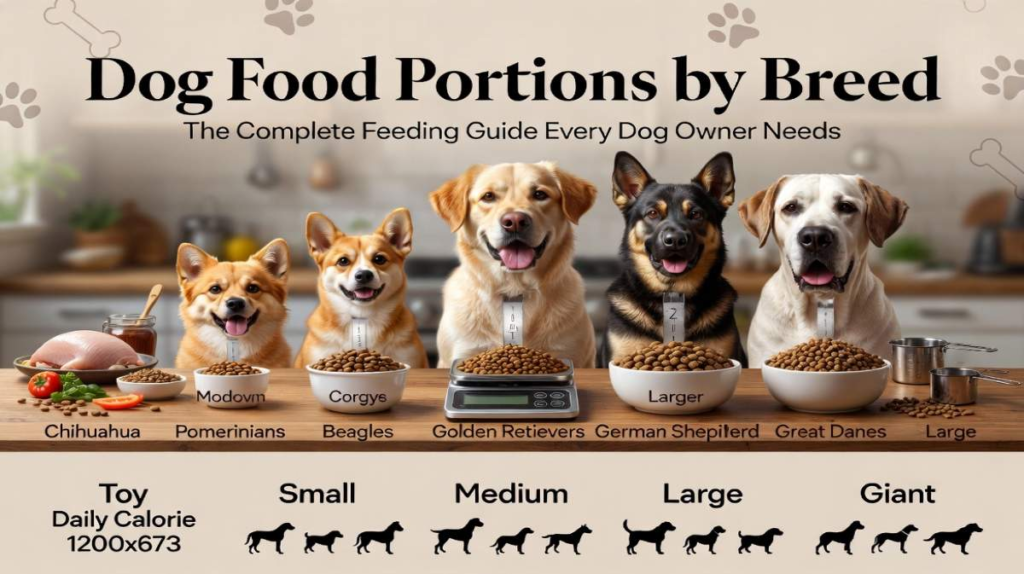
Your Chihuahua and your neighbour’s Labrador are both dogs. But feeding them the same portion would be like giving a toddler the same meal as a full-grown adult and expecting everything to be fine. It doesn’t work that way and when it comes to dog food portions by breed, getting it right genuinely matters for your dog’s health, energy, weight, and lifespan.
Overfeeding is one of the most common mistakes dog owners make and most don’t even realise they’re doing it. The bag says one thing, your dog’s bowl holds another, and before long you’ve got a dog that’s heavier than it should be and heading toward joint problems, diabetes, or heart disease. Underfeeding has its own consequences: low energy, a dull coat, and a dog that never quite seems satisfied.
This guide gives you breed-based feeding charts, portion guidelines by weight and age, and the practical knowledge to feed your dog the right amount every single day.
Why Dog Food Portions by Breed Actually Matter
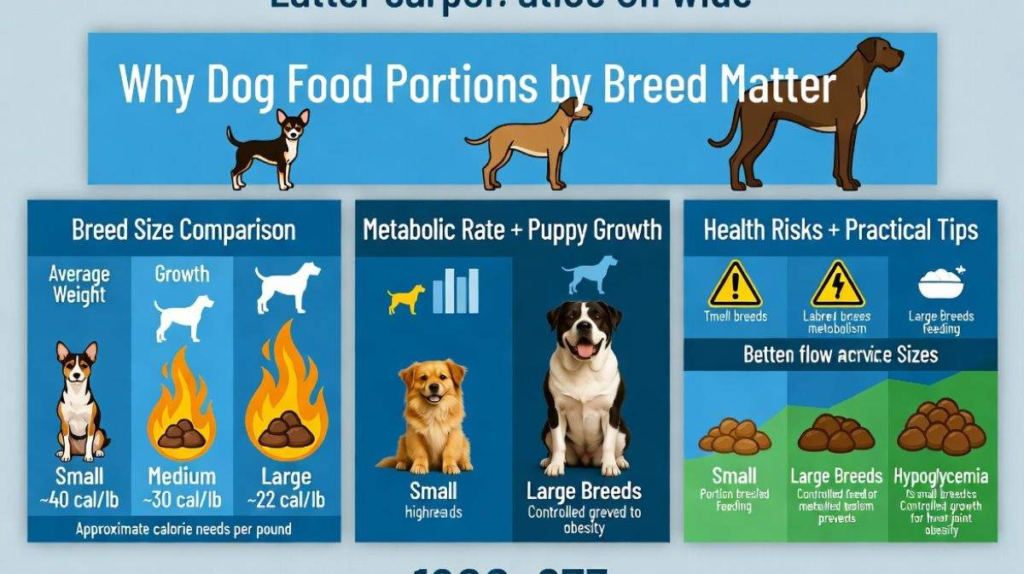
Not all dogs are built the same and that goes well beyond just their size. Breed directly affects a dog’s metabolism, natural activity level, jaw structure, digestive capacity, and even how efficiently they process calories. A Border Collie burns through energy at a completely different rate than a Basset Hound, even if both weigh exactly the same.
Toy breeds have fast metabolisms and need smaller, more frequent meals to keep their blood sugar stable. Large breeds eat bigger portions but often less frequently and need joint-supporting nutrients built into their diet.
Working breeds like Huskies and Border Collies can need up to 40% more calories per day than a sedentary dog of similar size. Getting this wrong, in either direction, leads to health problems that are entirely preventable.
Key Factors That Influence Your Dog’s Feeding Amount
Before looking at any chart, understand that portions are never one-size-fits-all. These are the variables that actually determine how much your dog needs each day.
- Breed and size. The most obvious factor. A Chihuahua needs roughly ¼ to ½ cup of dry food daily. A Great Dane can need 6 to 10 cups. The difference is enormous.
- Age. Puppies need significantly more calories per kilogram of body weight than adults. Senior dogs need fewer. The same dog will need three different feeding plans across its lifetime.
- Activity level. A working farm dog or a dog that runs 5 miles a day with you needs far more fuel than a dog that sleeps on the sofa most of the day.
- Reproductive status. Spayed and neutered dogs have slower metabolisms and typically need 10 to 20% fewer calories than intact dogs. Pregnant or nursing females need significantly more up to 50% extra during peak lactation.
- Health conditions. Dogs with diabetes, kidney disease, pancreatitis, or obesity require specific dietary management. Always work with a vet for these cases.
- Food type. Dry kibble, wet food, and raw food all have very different calorie densities. One cup of wet food provides roughly half the calories of one cup of dry food. Always check the kcal per cup on your specific brand.
Dog Food Portion Chart by Breed and Weight
The following chart gives daily dry food portion guidelines for adult dogs based on body weight. These are based on a standard dry kibble of approximately 360 to 400 kcal per cup. Adjust up or down based on your specific food’s calorie density.
| Dog Size | Weight Range | Daily Dry Food (cups) | Example Breeds |
| Toy | 2 to 5 lbs | ¼ to ½ cup | Chihuahua, Yorkshire Terrier |
| Small | 5 to 20 lbs | ½ to 1½ cups | Pomeranian, Shih Tzu, Pug |
| Medium | 20 to 50 lbs | 1½ to 2½ cups | Beagle, Cocker Spaniel, Bulldog |
| Large | 50 to 90 lbs | 2½ to 4 cups | Labrador, Golden Retriever, Husky |
| Extra Large | 90 to 110 lbs | 4 to 5½ cups | German Shepherd, Rottweiler |
| Giant | 110 lbs and above | 5½ to 10 cups | Great Dane, Saint Bernard, Mastiff |
Puppy Feeding Guide by Breed Size
Puppies have a completely different set of nutritional needs compared to adult dogs. They need more protein, more fat, and more frequent meals their growing bodies are working hard and burning through energy fast. As a general rule, puppies need to eat close to 9% of their body weight per day up to 12 weeks, then gradually reduce to around 3% by the end of their first year.
| Puppy Age | Meals Per Day | Notes |
| 6 to 12 weeks | 4 meals | Small, frequent portions stomach capacity is tiny |
| 3 to 6 months | 3 meals | Growth phase higher protein and fat essential |
| 6 to 12 months | 2 to 3 meals | Transition toward adult feeding schedule |
| 12 months plus | 2 meals | Most breeds can move to adult food at this stage |
Large and giant breed puppies need a specific large-breed puppy formula not standard puppy food. Growing too fast is genuinely dangerous for dogs like Great Danes and Saint Bernards, leading to bone and joint problems that cause lifelong pain. Feed them a formula designed to support controlled, steady growth.
Adult Dog Feeding Chart
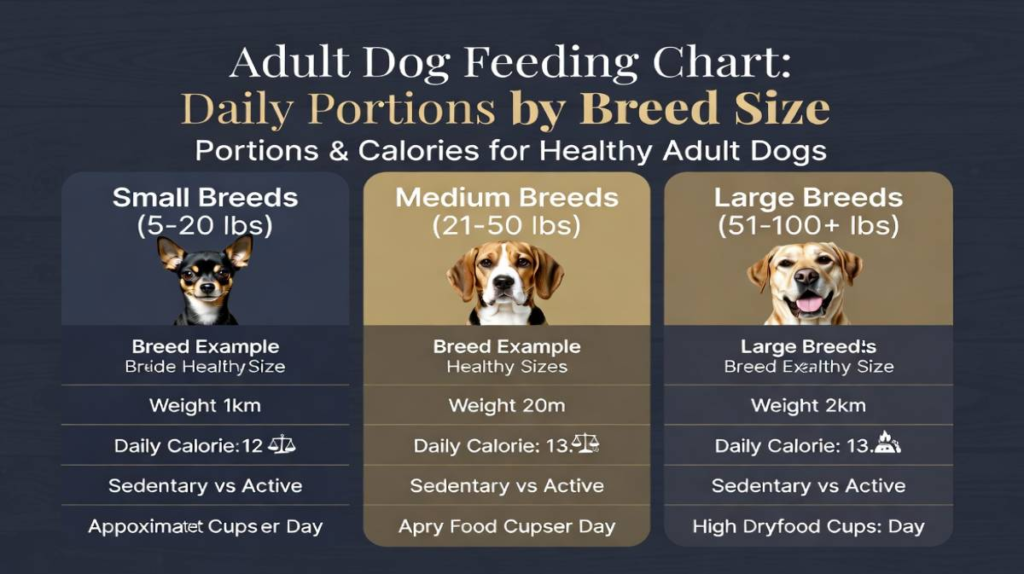
Most adult dogs do best on two meals a day one in the morning and one in the evening. This keeps their energy stable, supports healthy digestion, and reduces the risk of bloat in larger breeds.
Free-feeding (leaving food out all day) is one of the fastest routes to obesity in dogs. Measure every meal. Do not estimate by eye even experienced dog owners consistently pour 20 to 30% more than they think they are.
A healthy adult dog at the right weight should have a visible waistline when viewed from above, ribs you can feel but not see, and steady energy throughout the day. If your dog is gaining weight, reduce portions by 10% and reassess after two weeks. If they’re losing weight without reason, increase slightly and speak to your vet.
Senior Dog Feeding Guide
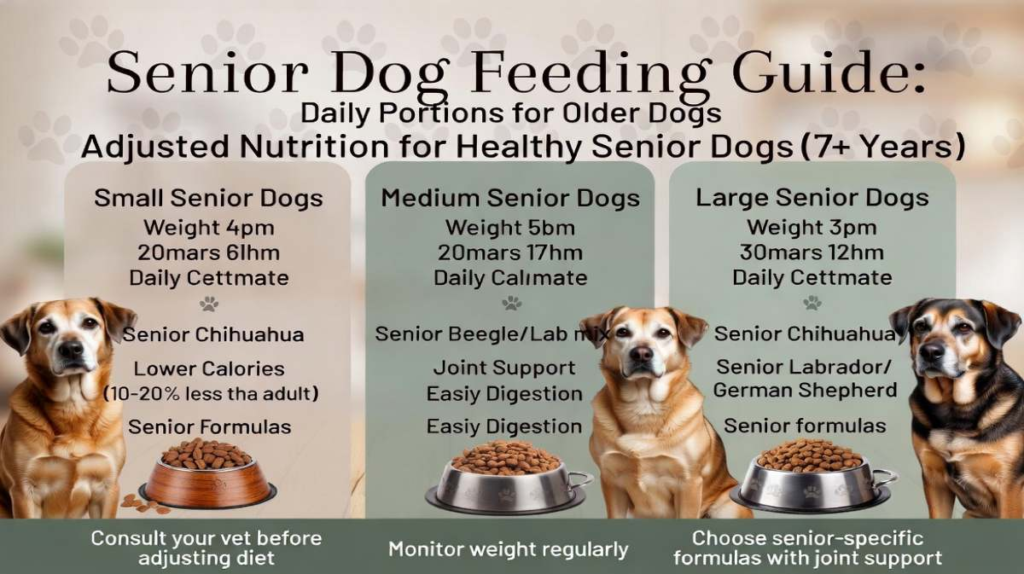
Senior dogs need fewer calories but not necessarily less food. As dogs age, their metabolism slows and muscle mass naturally decreases. The goal shifts from fuelling growth and activity to maintaining healthy weight and supporting aging joints and organs. Most dogs are considered senior at 7 years, though large breeds reach senior status earlier sometimes as young as 5.
- Reduce portion size by around 10 to 20% compared to their adult peak, unless your vet advises otherwise
- Choose a senior formula with higher-quality protein to maintain muscle mass with fewer total calories
- Joint-supporting ingredients like glucosamine and chondroitin are worth looking for in senior large-breed formulas
- Weigh your dog monthly weight loss in senior dogs can signal underlying health issues that need veterinary attention
Best Feeding Schedule for Dogs
Consistency is the single most underrated part of feeding a dog well. Dogs thrive on routine feeding at the same times every day, supports healthy digestion, helps with house training, and makes it much easier to spot when something is off (because a dog that normally inhales their food and suddenly isn’t interested is telling you something).
- Puppies under 6 months: 3 to 4 meals per day, evenly spaced
- Adult dogs: 2 meals per day morning and evening work well for most households
- Senior dogs: 2 meals per day, with smaller portions per meal
- Large and giant breeds: Never feed immediately before or after exercise bloat (gastric dilatation-volvulus) is a life-threatening risk in these breeds and is associated with eating around activity
Signs You Are Feeding the Wrong Amount
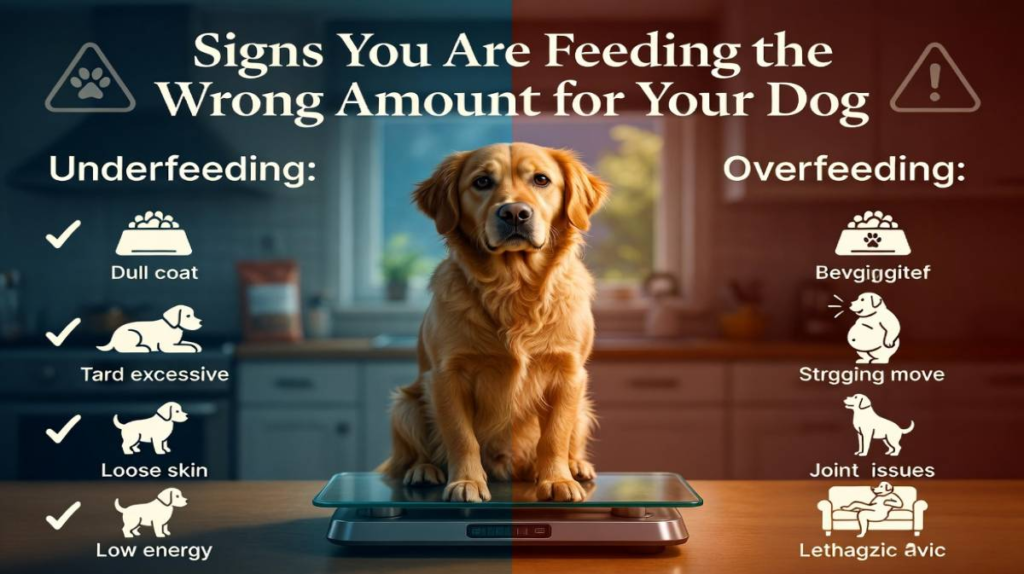
Your dog’s body tells you everything if you know what to look for. These are the clearest signals that portions need adjusting.
Signs of Overfeeding
- Visible weight gain you can no longer feel the ribs easily
- Low energy and reluctance to exercise
- Begging constantly even after finishing meals
- Loose stools from consuming more than the digestive system can process
Signs of Underfeeding
- Visible ribs, spine, or hip bones
- Dull, dry coat and flaky skin
- Low energy or lethargy
- Obsessive food-seeking behaviour scavenging, eating too fast, extreme interest in food scraps
Reading the Label How to Use Feeding Guidelines on Dog Food Bags
Every commercial dog food bag carries a feeding chart but most people misread it or ignore it entirely. Here’s how to actually use it properly.
The chart on the bag is based on that specific food’s calorie density, which can vary significantly between brands and formulas. Find your dog’s current weight in the chart and start with the lower end of the recommended range. If your dog is spayed or neutered, less active, or prone to weight gain, start at the lower end. If they’re highly active or a working breed, use the upper end as your starting point.
Treats count too. Most dog owners forget that treats add to the daily calorie total. If you use treats regularly for training or rewards, reduce the main meal portions slightly to compensate. Treats should account for no more than 10% of your dog’s total daily calories.
Frequently Asked Questions
What is the 7 7 7 rule for dogs?
A socialisation guideline 7 people, 7 places, and 7 experiences before 7 weeks of age. It builds confidence in puppies and reduces fear responses later in life. Not a feeding rule.
What portion size should I feed my dog?
Match your dog’s weight and life stage to the feeding chart on your specific food bag. A moderately active adult needs 1 to 3% of body weight in food daily. Adjust based on body condition ribs felt but not seen, visible waistline.
What is the best dog food for pancreatitis?
Low-fat, easily digestible food with less than 10% fat on a dry matter basis. Boiled chicken and plain rice works short-term during recovery. Always follow your vet’s specific plan pancreatitis needs professional management.
How much dog food should I feed a dog by breed?
It varies widely. Chihuahua ¼ to ½ cup daily. Labrador 2½ to 4 cups. Great Dane up to 10 cups. Always adjust for your dog’s actual weight, activity level, and the calorie density of the food.
How often should I feed my dog?
Twice a day for adult dogs morning and evening. Puppies under 6 months need 3 to 4 meals daily. Seniors stay on twice daily with adjusted portions.
How many cups of food should I feed my dog each day?
Small dogs ½ to 1½ cups. Medium dogs 1½ to 2½ cups. Large dogs — 2½ to 4 cups. Giant breeds up to 10 cups. Always measure — never estimate by eye.
How do I know if I’m feeding my dog enough?
Healthy weight signs visible waistline, ribs felt but not seen, steady energy, firm stools. Ribs clearly visible means too little. Can’t feel them at all means too much. Your vet can give an accurate body condition score if you’re unsure.