
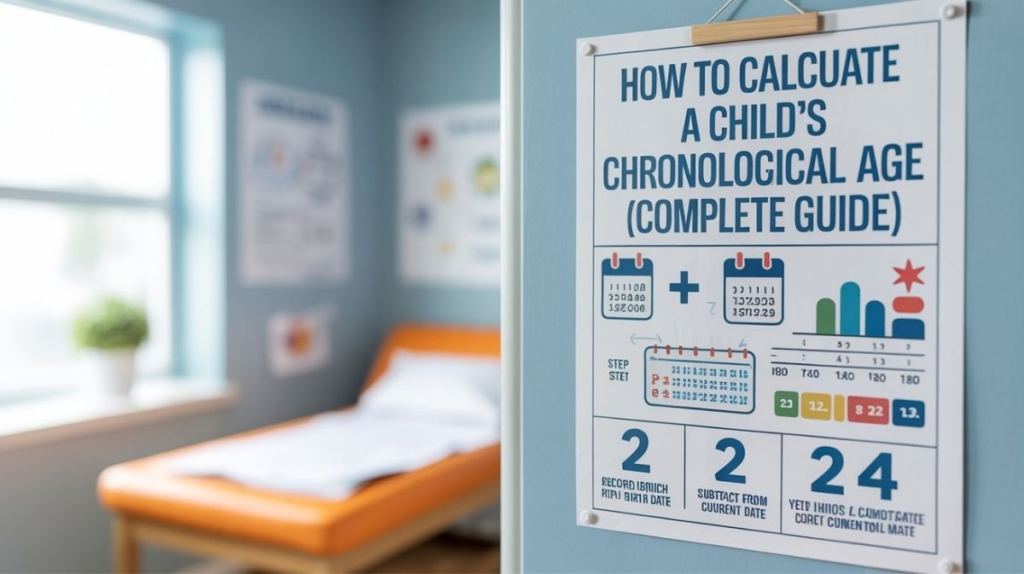
When you need to find a child’s exact age, the process may look simple at first, but small details often create confusion. Many parents, teachers, and even professionals want a quick and accurate answer without spending time on manual counting. This is where understanding the right method becomes important.
The basic way to calculate a child’s chronological age is to subtract the date of birth from today’s date. This gives the age in years, months, and days. While this sounds easy, the calculation becomes tricky because months have different lengths and leap years add extra days. That is why using a reliable method or a calculator helps avoid mistakes and gives a clear result instantly.
What Does Chronological Age Really Mean
Chronological age refers to the actual time a child has lived since birth. It is calculated from the exact birth date up to the current date and is usually expressed in years, months, and days. This type of age is different from developmental age, which focuses on skills and abilities rather than time.
In real life, chronological age is used in many important situations. Schools use it to decide grade placement, while doctors rely on it to monitor growth and development. Parents also use it to understand whether their child is reaching milestones at the expected time. Because of this, accuracy in calculation is very important and cannot be ignored.
How Chronological Age Calculation Actually Works
The calculation follows a simple idea, but the process requires careful adjustment. You start by comparing the child’s date of birth with the current date. First, you calculate the difference in years. Then you adjust the months and days depending on whether the current date has passed the birthday in that year.
If the current month and day are earlier than the birth month and day, you subtract one year and adjust the months accordingly. This step is where most people make mistakes because it requires careful counting and understanding of date differences.
There are also technical factors involved. Different months have different numbers of days, and leap years add an extra day in February. These small details can change the final result. A calculator handles all these adjustments automatically, making the process faster and more accurate without requiring manual effort.
How to Calculate a Child’s Chronological Age Step by Step
Calculating chronological age means finding the exact amount of time between a child’s date of birth and a specific target date. The target date is usually today, but it can also be a school admission date, medical assessment date, or another important date.
For an accurate result, compare the dates from days to months to years. When the day or month in the target date is smaller than the corresponding birth date, you need to borrow from the next unit.
Step 1: Subtract the Days
Start by comparing the day of the target date with the day of birth.
If the target day is equal to or greater than the birth day, subtract normally. If the target day is smaller, you need to borrow one month from the target month.
For example, if the target date is October 10 and the birth date is August 25, you cannot subtract 25 from 10 directly. You first borrow a month, then calculate the remaining days based on the calendar.
This is important because months do not all have the same number of days.
Step 2: Subtract the Months
After calculating the days, compare the target month with the birth month.
If the target month is greater than or equal to the birth month, subtract normally. If it is smaller, borrow one year from the target year and convert that year into 12 months.
This gives you the remaining number of months after accounting for the child’s completed years.
Step 3: Subtract the Years
Finally, subtract the birth year from the adjusted target year.
The result gives the completed years of chronological age. Combine the years, months, and days to get the child’s complete chronological age.
For exact calendar calculations, it is better to use the actual dates rather than treating every month as exactly 30 days.
Worked Example: Calculating a Child’s Chronological Age
Let’s say a child was born on August 25, 2018, and you want to calculate their chronological age on October 10, 2026.
Start with the two dates:
Date of birth: August 25, 2018
Target date: October 10, 2026
The child has already passed their birthday in 2026, so the completed age is 8 years.
Next, compare August 25 with October 10. Because the target day, 10, is earlier than the birth day, 25, the calculation requires borrowing from the previous month.
Using the actual calendar dates, the result is:
8 years, 1 month, and 15 days
So, on October 10, 2026, the child’s chronological age is 8 years, 1 month, and 15 days.
This same method can be used with any birth date and target date. A chronological age calculator simply performs these date adjustments automatically.
How Leap Years and Different Month Lengths Affect Age Calculation
Calendar dates can make chronological age calculations more complicated than simply subtracting one number from another.
Months have different lengths. Some contain 31 days, others 30, while February has 28 days in a regular year and 29 days during a leap year.
Leap years can therefore affect calculations involving February dates. This is one reason manual calculations can become confusing when you need an exact result in years, months, and days.
A reliable chronological age calculator accounts for the actual calendar when comparing the two dates. This helps avoid errors caused by assuming that every month contains the same number of days.
How to Calculate Age on a Specific Date
Chronological age does not always need to be calculated from the date of birth to today’s date. You can calculate a child’s age on any specific date.
This is useful when the age needs to be known on a particular:
- School admission date
- Assessment date
- Medical appointment
- Testing date
- Registration date
- Eligibility cutoff date
For example, a child may be 8 years old today but have been 7 years, 11 months, and 20 days old on an earlier assessment date.
To calculate the age correctly, use the date of birth and the exact target date rather than today’s date. This gives you the child’s chronological age at that particular point in time.
How to Calculate a Child’s Age in Months
Sometimes years, months, and days are not the most useful way to report a child’s age. For younger children, age may also be expressed in total months.
To calculate total months, first determine the number of completed years and months between the birth date and target date. Then convert the completed years into months.
For example, a child who is 3 years and 4 months old has:
3 × 12 = 36 months
Add the remaining 4 months:
36 + 4 = 40 months
So the child is approximately 40 months old, before accounting for any remaining days.
For exact developmental or assessment purposes, the required format can vary, so it is important to follow the age format requested by the school, healthcare provider, or assessment.
Why Chronological Age Is Important in Real Life
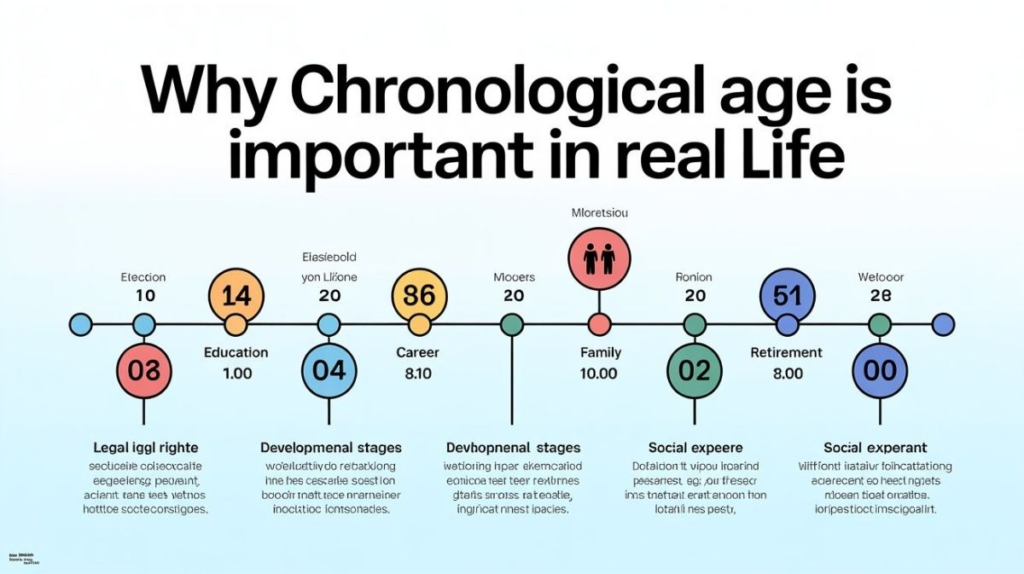
Chronological age is not just a number. It plays a key role in many real-life decisions that affect a child’s future. One of the most common uses is in school admissions. Educational systems often have strict age requirements, and even a small difference in months can affect eligibility.
In healthcare, doctors use chronological age to compare a child’s growth with standard development charts. This helps them identify whether the child is growing normally or needs attention. Without accurate age calculation, these assessments may not be reliable.
Parents also benefit from understanding chronological age because it helps them track milestones. Whether it is learning new skills or physical growth, knowing the exact age provides a clear reference point. This makes it easier to support the child at the right stage of development.
Chronological Age vs Developmental Age
Chronological age and developmental age describe two different things.
Chronological age is based on the amount of calendar time that has passed since birth. For example, a child may be 6 years, 3 months, and 10 days old chronologically.
Developmental age relates to how a child’s skills and abilities compare with typical developmental expectations. It may consider areas such as language, movement, learning, social skills, or other developmental milestones.
A child’s developmental progress does not always match their chronological age exactly. Therefore, chronological age provides the time-based reference, while developmental assessments look at skills and abilities.
Fast and Accurate Chronological Age Calculation
If you want a quick and error-free way to calculate a child’s chronological age, UltimateCalculator makes the process simple and reliable. Instead of spending time on manual calculations, you can enter the date of birth and get the exact age in seconds.
The tool is designed to handle all date differences automatically, including months and leap years, so you always get accurate results. It works smoothly on any device and is easy to use for parents, teachers, and professionals.
With UltimateCalculator, you save time, avoid mistakes, and get clear results every time
When Do You Need an Exact Chronological Age?
Knowing a child’s age in completed years is often enough for everyday situations. However, some situations require a more precise calculation that includes months and days.
An exact chronological age can be useful for:
School and education: Age may be needed when checking enrollment requirements, grade placement, or eligibility dates.
Child development: Parents and professionals may need the exact age when comparing developmental milestones or reviewing progress.
Assessments and testing: Some assessments use a child’s chronological age when interpreting results.
Healthcare records: Accurate age helps provide the correct time-based context for growth and development information.
Official forms: Applications, registrations, and other records may require the exact age on a particular date.
When the difference of a few weeks or months matters, calculating the age precisely is more useful than simply stating the child’s age in whole years
Key Benefits of Using a Chronological Age Calculator
Using a calculator offers clear advantages that go beyond convenience. The most important benefit is accuracy. A well-designed tool calculates the exact age without missing any details, including leap years and day differences.
Another benefit is speed. Instead of spending time calculating manually, you get instant results by entering the date of birth. This is especially useful when you need quick answers for school forms or medical records.
A calculator also removes confusion. Manual calculations can create doubt, especially when the result looks slightly different from expectations. With a tool, you can trust the output without needing to double-check every step.
- saves time and effort
- provides accurate results
- removes calculation errors
- easy to use for anyone
Manual Calculation vs Age Calculator (Which One Is Better)
| Feature | Manual Calculation | Chronological Age Calculator |
| Ease of Use | Requires understanding of date calculation and careful steps | Very simple, just enter date of birth |
| Time Required | Takes more time to calculate manually | Gives instant results in seconds |
| Accuracy | High chance of mistakes in months and days | Highly accurate with automatic adjustments |
| Handling Complexity | Difficult to adjust for leap years and different month lengths | Handles leap years and date differences automatically |
| Reliability | Depends on user skill and attention | Consistent and reliable every time |
| Best For | Learning or basic understanding | Daily use, fast and error-free results |
Overall, a chronological age calculator is the better choice because it saves time, reduces errors, and gives accurate results instantly.
Common Mistakes That Can Give You the Wrong Age
Many people make small but important mistakes when calculating age manually. One common issue is focusing only on years and ignoring months and days. This leads to incomplete and sometimes misleading results.
Another mistake is not adjusting when the birthday has not yet occurred in the current year. This can make the calculated age appear higher than it actually is. People also forget about leap years, which can slightly affect the final count.
Use Our Chronological Age Calculator for Instant Results
These errors may seem minor, but they can create problems in situations where accuracy is required. That is why it is important to use a method that considers all factors correctly.
If you want a fast and reliable way to calculate age, using a chronological age calculator is the best option. The process is simple and does not require any technical knowledge. You only need to enter the child’s date of birth, and the tool does the rest.
Within seconds, you get the exact age in years, months, and days. This removes all guesswork and ensures the result is correct. It is especially useful for parents, teachers, and healthcare professionals who need accurate information quickly.
Using a calculator not only saves time but also builds confidence. You can rely on the result without worrying about mistakes or miscalculations.
Common Mistakes When Calculating a Child’s Chronological Age
Calculating chronological age can seem straightforward, but small errors can change the final result. This is especially important when the exact age is needed for school records, assessments, or other official purposes.
Counting Only the Years
One of the most common mistakes is subtracting the birth year from the current year and stopping there. This can give the wrong age if the child’s birthday has not occurred yet in the target year.
Always compare the month and day as well as the year.
Ignoring the Exact Day
A child who is 8 years and 11 months old is not the same age as a child who has just turned 8. When an exact chronological age is required, the remaining months and days should also be included.
Treating Every Month as 30 Days
Months have different numbers of days. February can have 28 or 29 days, while other months have 30 or 31 days.
Using 30 days for every month can produce an inaccurate result when calculating an exact calendar age.
Forgetting Leap Years
Leap years can affect calculations that involve February 29 or dates around February. Ignoring leap years may lead to an incorrect number of days.
Using Today’s Date When a Specific Date Is Required
Sometimes the required age is the child’s age on a particular assessment, school, or registration date. Using today’s date instead can produce the wrong result.
Always use the specific target date when the age is needed for a particular event or assessment.
Mixing Up Chronological and Developmental Age
Chronological age is based on the time that has passed since birth. Developmental age describes a child’s skills and abilities compared with developmental expectations.
They are related, but they are not interchangeable.
Entering the Dates Incorrectly
A simple date-entry mistake can completely change the result. Double-check the day, month, and year of birth before calculating the age.
For a quick and accurate result, you can use our Chronological Age Calculator instead of calculating every date difference manually.
Final Thoughts
Calculating a child’s chronological age may look simple, but the details can make it complicated. Small errors in counting months or days can lead to incorrect results, which may affect important decisions.
Understanding the correct method helps, but using a calculator makes the process easier and more reliable. It ensures accuracy, saves time, and removes confusion completely. For anyone who needs a quick and precise answer, a chronological age calculator is the most practical solution.
FAQs
How to calculate a child’s chronological age accurately
The most accurate way is to subtract the date of birth from the current date while adjusting for months and days. A calculator makes this process easier by handling all adjustments automatically.
What is chronological age in children
Chronological age is the exact age of a child based on the time passed since birth. It is usually measured in years, months, and days.
Why is chronological age important
It is used in education, healthcare, and development tracking. Accurate age helps in proper placement, assessment, and understanding of growth stages.