
Wet Bulb Calculator
What Is Wet Bulb Calculator?
A Wet Bulb Calculator is an online tool that works out the wet bulb temperature from the dry bulb temperature and the relative humidity. The wet bulb temperature is the lowest temperature that air can reach by evaporation, and it tells you how much cooling sweat or a damp surface can provide. It is a key reading in meteorology, HVAC design, farming, and heat stress planning, as described in Wet-bulb temperature – Wikipedia.
The idea is simple. A wet bulb thermometer is a thermometer with a wet cloth over its bulb. As water evaporates from the cloth, it cools the bulb, and the temperature it settles at is the wet bulb temperature. When the air is dry, evaporation is fast and the wet bulb reads well below the air temperature. When the air is humid, evaporation is slow and the two readings are close together. The field that studies these measurements is called psychrometrics, as explained in Psychrometrics – Wikipedia.
This calculator uses the Stull formula, a widely used approximation that estimates the wet bulb temperature from air temperature and relative humidity. The formula was fitted to laboratory measurements, so it is accurate to a fraction of a degree over the range of temperatures and humidities people normally meet. It is accurate enough for weather checks, indoor comfort, and heat safety planning, and it works on phones, tablets and desktop computers with nothing to install.
Knowing the wet bulb temperature matters most on hot and humid days. It shows how well the body can cool itself by sweating, and it is the number behind heat stress warnings for outdoor workers, athletes, and anyone spending time in the heat. A sustained wet bulb temperature of 35 °C is considered a limit for human survival, as explained in Heat index – Wikipedia.
How to Use Wet Bulb Calculator?
Using the wet bulb calculator is quick and very easy. You do not need any technical knowledge or experience. Follow these simple steps:
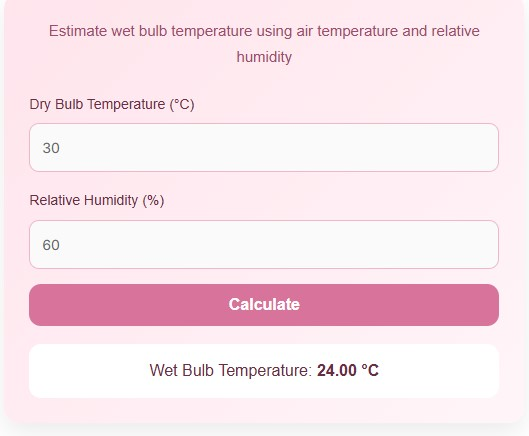
- Enter the dry bulb temperature in degrees Celsius. For example, 30 is a warm summer afternoon.
- Input the relative humidity percentage. For example, 60 means the air holds 60% of the moisture it could hold at that temperature.
- Click on the “Calculate” button.
- The wet bulb temperature will appear instantly on the screen, in degrees Celsius.
- Try a different humidity to see the effect: higher humidity pushes the wet bulb closer to the air temperature, while lower humidity pulls it further down.
The calculator is fully responsive, so you can use it on mobile phones, tablets, laptops, and desktops. If you do not know the relative humidity yet, our Relative Humidity Calculator works it out from air temperature and dew point.
Formula and worked example
The Stull formula estimates the wet bulb temperature Tw from the air temperature T in degrees Celsius and the relative humidity RH as a percentage. It is an approximation, but it is close to the value a wet bulb thermometer would read, and it is the formula used by weather services and textbooks. The result is always at or below the air temperature, because evaporation can only cool the bulb.
Wet bulb temperature is always at or below the dry bulb temperature
At 100% relative humidity, wet bulb temperature equals dry bulb temperature
Work through 30 °C and 60% relative humidity. The calculator applies the Stull formula to those two numbers and returns a wet bulb temperature of 24.00 °C. That means air at 30 °C and 60% humidity can cool a wet surface down to 24 °C by evaporation, but no lower. Enter 30 and 60 into the calculator above and it returns: Wet Bulb Temperature: 24.00 °C, which matches this working.
At 100% humidity the wet bulb equals the dry bulb, because the air cannot take in any more water vapour and no evaporation happens. At 0% humidity the wet bulb is much lower. The worked example sits between the two: the air holds 60% of its possible moisture, so evaporation still cools the bulb by 6 degrees.
Use this calculator before outdoor work, sport, or a heatwave day, when you want to judge heat stress, or when you design ventilation and cooling for a building. Farmers use it to judge crop stress, and HVAC technicians use it to size cooling equipment. Keep in mind that it estimates the wet bulb from an approximation, so it is not a replacement for a calibrated wet bulb thermometer in a laboratory, and it does not account for wind, sunlight, or clothing.
FAQs
What is wet bulb temperature?
Wet bulb temperature is the lowest temperature air can reach through evaporation. It shows how humid the air is: dry air evaporates water quickly and cools a wet thermometer well below the air temperature, while humid air cools it only slightly. At 100% humidity the wet bulb equals the air temperature, and the two readings meet.
Why is wet bulb temperature important?
It helps assess heat stress, weather comfort levels, and safety conditions in hot and humid environments. It tells you how well the body can cool itself by sweating, which is why it is used by weather services, sports organisers, and employers planning outdoor work in a heatwave.
Is this wet bulb calculator accurate?
Yes, it uses a reliable and widely accepted approximation, the Stull formula, to produce results. For everyday use, weather checks, and heat safety planning, its estimate is close to what a wet bulb thermometer would read. For laboratory work, use a calibrated wet bulb thermometer instead.
Can I use this calculator on mobile devices?
Yes, the calculator is fully responsive and works perfectly on smartphones and tablets. The two input boxes and the Calculate button stay large and easy to tap, so you can check the wet bulb temperature on site, in a greenhouse, or on the sports field.
Who can use a wet bulb calculator?
Students, weather analysts, HVAC professionals, farmers, industrial workers, and general users can all use it. Anyone who works outdoors, plans an event in hot weather, or designs cooling and ventilation will find the reading useful, and no technical knowledge is needed. It is also handy at home, for example when you want to know whether a room feels hotter than the thermometer says.
Disclaimer
This Wet Bulb Calculator is for educational and informational purposes only. Results are estimates based on the Stull approximation and should not replace professional advice or calibrated measurements for safety-critical decisions.