
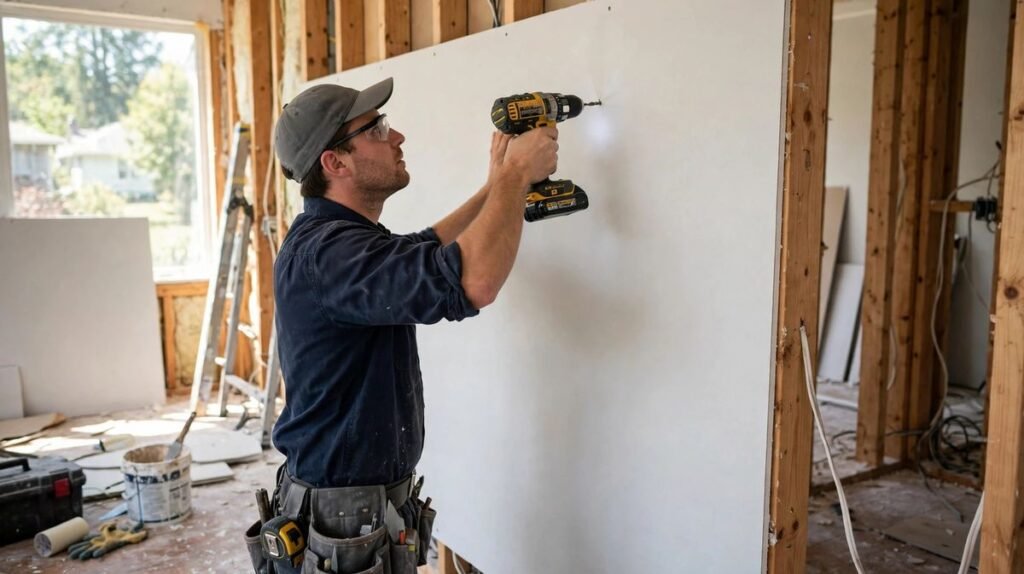
A standard 4 by 8 foot sheet of drywall typically needs around 28 to 32 screws when installed on walls and approximately 32 to 40 screws when installed on ceilings. The exact number depends on framing spacing, screw placement, drywall orientation and installation requirements.
Ceilings generally need more screws because the panels are affected by gravity and must remain securely attached to the overhead framing.
If you are installing drywall in one room or completing an entire house, knowing how many screws you need per sheet can help you estimate materials, avoid running short and reduce unnecessary waste.
In this guide, you will learn how many drywall screws different sheet sizes require, how far apart to place them, how to calculate the quantity for multiple sheets and which screws to use for your project.
How Many Drywall Screws Per Sheet?
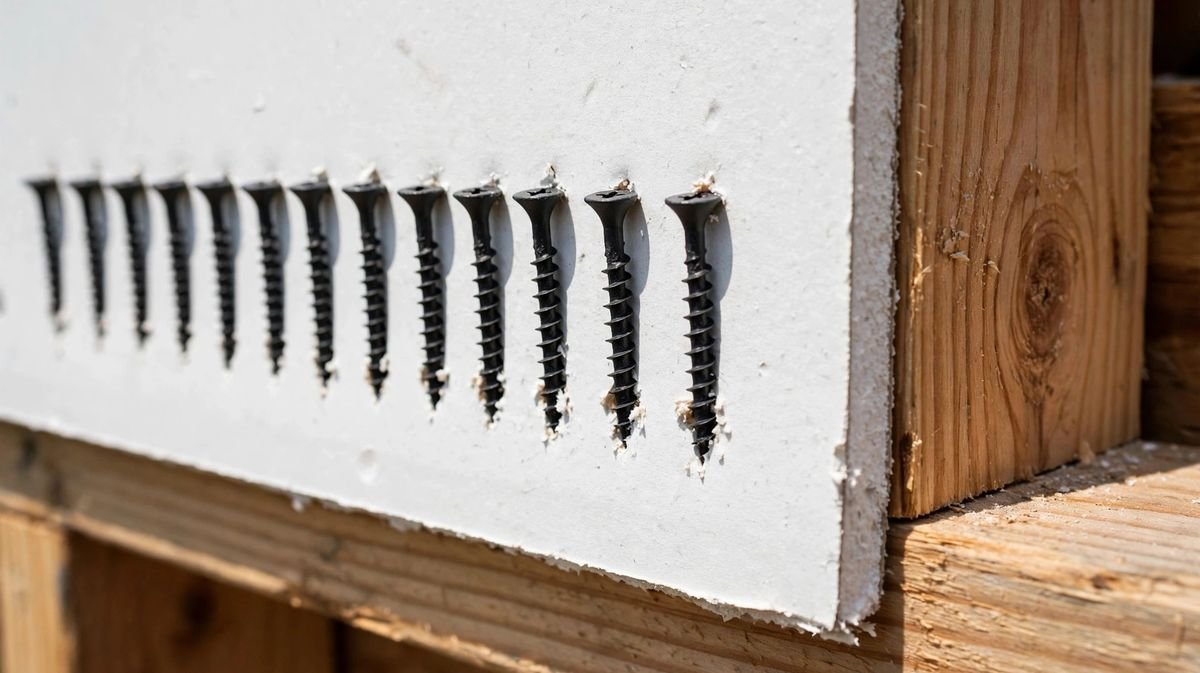
The number of drywall screws required depends on the sheet dimensions and whether you are installing the panels on walls or ceilings.
For a typical 4 by 8 foot sheet, the following figures are useful preliminary estimates:
| Drywall sheet size | Wall installation | Ceiling installation |
|---|---|---|
| 4 by 8 feet | 28 to 32 screws | 32 to 40 screws |
| 4 by 10 feet | 35 to 42 screws | 40 to 48 screws |
| 4 by 12 feet | 42 to 48 screws | 48 to 56 screws |
These figures are planning estimates, not fixed industry requirements. Actual quantities depend on the framing layout, fastener spacing, panel orientation, supported edges and applicable installation specifications.
How Many Screws Go in a 4 by 8 Sheet of Drywall?
A standard 4 by 8 foot drywall sheet has an area of 32 square feet.
For wall installation, approximately 28 to 32 screws is a reasonable estimating allowance for a conventional layout.
For ceiling installation, plan for approximately 32 to 40 screws because ceiling screws are generally spaced closer together.
For example, if you are installing 10 sheets of 4 by 8 drywall on walls, using 30 screws per sheet gives you:
10 × 30 = 300 screws
Adding an additional 10% allowance gives:
300 × 1.10 = 330 screws
You would therefore want approximately 330 screws available for this example.
How Many Drywall Screws Per Sheet for Walls?
When installing drywall on walls, screws are driven into the vertical studs behind the panels.
For common single layer applications with framing spaced 16 inches on center, USG recommends screw spacing of up to 16 inches along the framing members.
A standard 4 by 8 sheet installed across this framing can require approximately 28 to 32 screws, depending on the layout.
Important installation considerations include:
- Make sure the drywall edges are supported by framing or suitable backing.
- Position screws along the framing members.
- Keep the screws at least 3/8 inch away from panel edges.
- Drive the screws slightly below the drywall surface without breaking the paper.
- Follow the panel manufacturer’s installation instructions.
The correct screw pattern matters more than simply reaching a target number of screws.
How Many Drywall Screws Per Sheet for Ceilings?
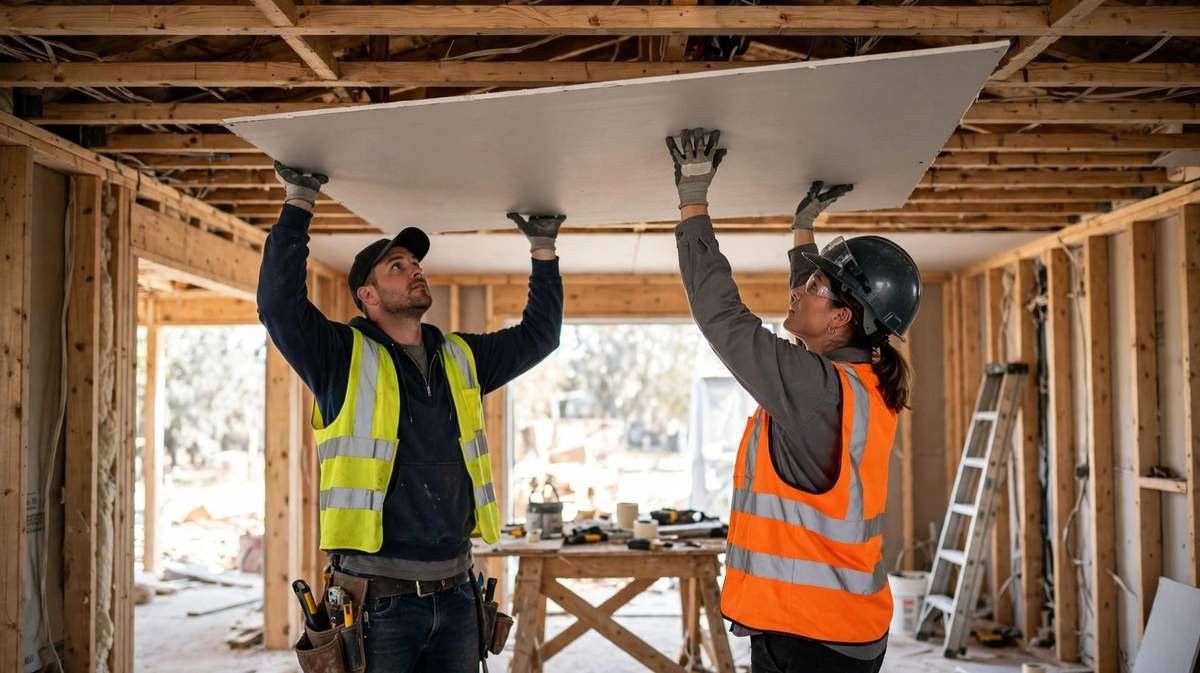
Ceiling drywall usually requires more attention than wall drywall because the panels are installed overhead.
Gravity constantly pulls the panels downward, making secure attachment especially important.
For common non fire rated applications, USG recommends drywall screw spacing of up to 12 inches on ceilings.
A 4 by 8 ceiling sheet typically needs approximately 32 to 40 screws as a preliminary estimate.
Ceiling installations may require additional considerations, including:
- Joist spacing and direction
- Drywall thickness
- Insulation above the ceiling
- Panel orientation
- Ceiling framing requirements
- Fire rated or other special assembly requirements
Always follow the manufacturer’s instructions and the applicable assembly specifications. Do not assume that a standard wall screw pattern is suitable for ceilings.
What Is the Recommended Drywall Screw Spacing?
Screw spacing determines how securely drywall is attached to the framing.
For common single layer applications, the following guidance is useful:
| Installation location | Typical maximum screw spacing |
|---|---|
| Walls with framing 16 inches on center | 16 inches |
| Ceilings with framing 16 inches on center | 12 inches |
| Walls with framing 24 inches on center | 12 inches |
| Ceilings with framing 24 inches on center | 12 inches |
These values are based on the applicable provisions of ASTM C840 and manufacturer guidance. Specific board types, orientations, fire rated assemblies and project specifications can require different patterns.
Wall Screw Spacing
For a typical wall installation, screws are placed along each stud at the required intervals.
With studs spaced 16 inches apart, a standard screw pattern can use 16 inch spacing along each stud.
Make sure panel edges and ends are properly supported.
Ceiling Screw Spacing
For ceiling applications, screw spacing is generally closer.
A 12 inch spacing pattern is commonly used for the specified ceiling applications. Additional requirements may apply depending on the board and ceiling assembly.
How Far Should Drywall Screws Be From the Edge?
Keep drywall screws at least 3/8 inch from the edges and ends of the panel unless the manufacturer’s instructions specify otherwise.
Placing screws too close to the edge can damage the paper facing or cause the gypsum core to break.
How to Calculate Drywall Screws for Multiple Sheets
You can estimate your total screw requirements using a simple formula.
Drywall Screw Calculation Formula
Total Screws = Number of Sheets × Screws Per Sheet
For a more practical purchasing estimate, add an allowance for damaged, dropped or unusable screws.
Formula with Waste Allowance
Total Screws = Number of Sheets × Screws Per Sheet × 1.10
The 10% allowance is a planning choice rather than a construction standard.
Example 1: How Many Screws for 20 Sheets of Drywall?
Suppose you are installing 20 sheets on walls and estimate 30 screws per sheet.
20 × 30 = 600 screws
Adding 10%:
600 × 1.10 = 660 screws
You should plan for approximately 660 screws.
Example 2: How Many Screws for 50 Sheets of Drywall?
Suppose you are installing 50 sheets on ceilings and estimate 36 screws per sheet.
50 × 36 = 1,800 screws
Adding 10%:
1,800 × 1.10 = 1,980 screws
You should have approximately 1,980 screws available.
Example 3: How Many Screws for 100 Sheets of Drywall?
Suppose each sheet requires 30 screws.
100 × 30 = 3,000 screws
With a 10% allowance:
3,000 × 1.10 = 3,300 screws
Your estimated requirement is 3,300 screws.
What Size Drywall Screws Should You Use?
Choosing the correct screw length is important for a secure drywall installation.
The required length depends on drywall thickness and the framing material.
Here is a general reference for common single layer applications:
| Drywall thickness | Common screw length for wood framing |
|---|---|
| 1/2 inch | 1 1/4 inches |
| 5/8 inch | 1 5/8 inches |
| 1/4 inch | Depends on the application and framing requirements |
For metal framing, use screws specifically designed for the framing material. Their type and length depend on the metal thickness and drywall specification.
Always check the drywall manufacturer’s recommendations before purchasing screws.
Coarse Thread vs. Fine Thread Drywall Screws
Drywall screws are available in different thread designs. The right choice depends on the framing material.
Coarse Thread Screws
Coarse thread drywall screws are commonly used for wood studs.
Their wider threads provide a strong grip in wood framing.
They are a common choice for attaching standard drywall panels to timber studs.
Fine Thread Screws
Fine thread drywall screws are commonly used with metal studs.
Their finer threads are designed to engage metal framing more effectively.
Choose screws that are compatible with the thickness and type of metal framing being used.
How Many Drywall Screws Are in a Box?
The number of screws in a box depends on the screw length, diameter, weight and packaging.
Manufacturers sell drywall screws in different quantities, including small boxes and larger bulk packages.
For example, a box may contain 500, 1,000 or several thousand screws, depending on its size and product specifications.
Do not assume every box contains the same number of screws. Check the package label before estimating how many boxes your project requires.
How Many Drywall Screws Are in a Pound?
The number of drywall screws per pound varies according to screw length, gauge and design.
Longer and heavier screws generally mean fewer pieces per pound.
If you are purchasing screws by weight, check the manufacturer’s stated piece count or package specifications rather than relying on a universal conversion.
Common Drywall Screw Installation Mistakes
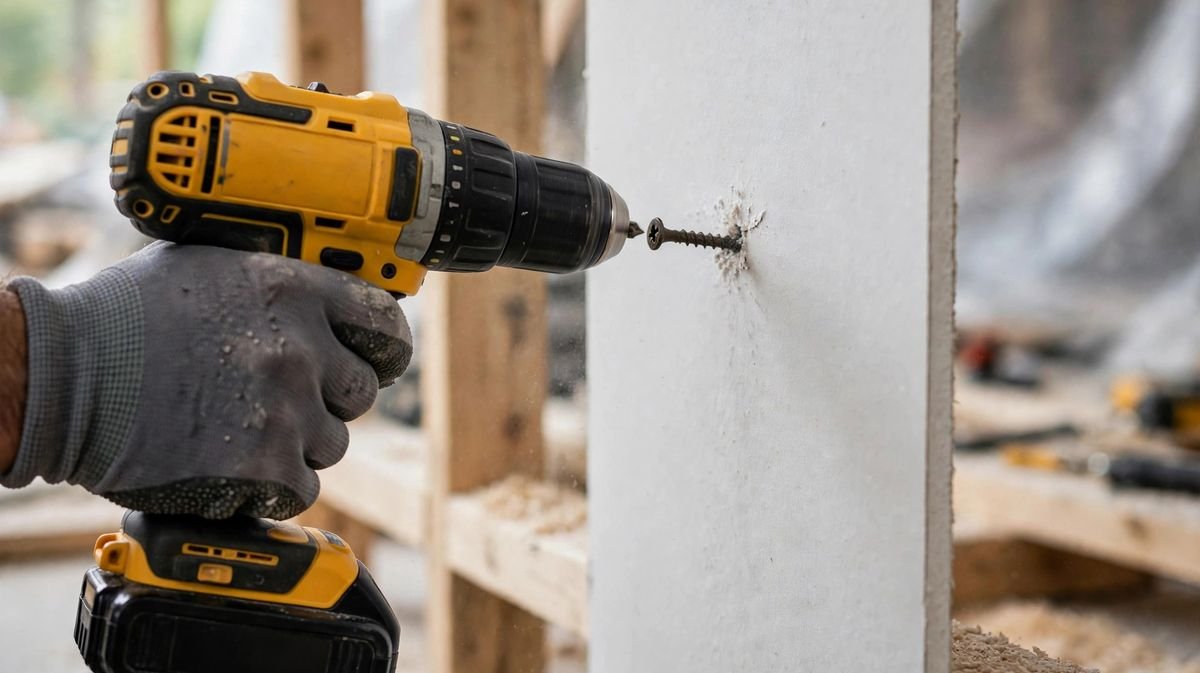
Using the right quantity of screws is important, but proper installation is equally important.
Avoid these common mistakes.
Placing screws too close to panel edges: This can damage the drywall paper and weaken the surrounding material.
Driving screws too deeply: A screw that breaks through the paper facing can reduce its holding ability.
Using the wrong screw length: Screws that are too short may not provide adequate penetration into the framing.
Ignoring framing spacing: The number of screws required changes depending on the distance between studs or ceiling joists.
Using wall spacing on ceilings: Ceiling applications commonly require closer screw spacing.
Failing to locate the framing: Screws must engage the framing or other specified backing rather than simply entering unsupported drywall.
Using unsuitable screws for metal framing: Choose screws designed for the framing material.
Final Thoughts
A standard 4 by 8 foot drywall sheet generally requires around 28 to 32 screws for walls and 32 to 40 screws for ceilings as a preliminary estimating guide.
However, the correct quantity depends on panel dimensions, framing spacing, installation orientation and the applicable construction specifications.
Before purchasing screws, calculate the total number of drywall sheets, determine the appropriate spacing and add a reasonable allowance for waste.
Using the correct screw type, length and installation pattern will help create a secure drywall installation and a smoother finishing process.
Disclaimer: This article provides general construction information for estimating purposes. Actual drywall fastening requirements depend on the board manufacturer, framing material, building code and assembly specifications. Follow applicable installation standards, particularly for fire rated and specialty assemblies.

Taha Rasheed is a content researcher and editor at UnlimitedCalculators.com. He is passionate about making everyday calculations easier and more accessible through simple, practical, and easy-to-understand online tools.
He focuses on researching calculation methods, creating helpful content, and improving the clarity and usability of calculator resources across different topics, including mathematics, finance, education, health, and everyday calculations.
At UnlimitedCalculators.com, Taha aims to provide useful, informative, and user-friendly resources that help visitors understand calculations and make everyday tasks simpler.