
Soil Calculator
What is Soil Calculator?
A Soil Calculator is a simple yet powerful online tool used to estimate the amount of soil required for gardening, landscaping, construction, or agricultural projects. Whether you are filling a garden bed, preparing land for planting, or leveling a yard, calculating the correct soil quantity can save both time and money.
In many landscaping projects, people often struggle with determining how much soil they actually need. Buying too little soil means making additional trips to suppliers, while purchasing too much leads to unnecessary costs and waste. A soil calculator solves this problem by automatically estimating soil volume based on the measurements you enter.
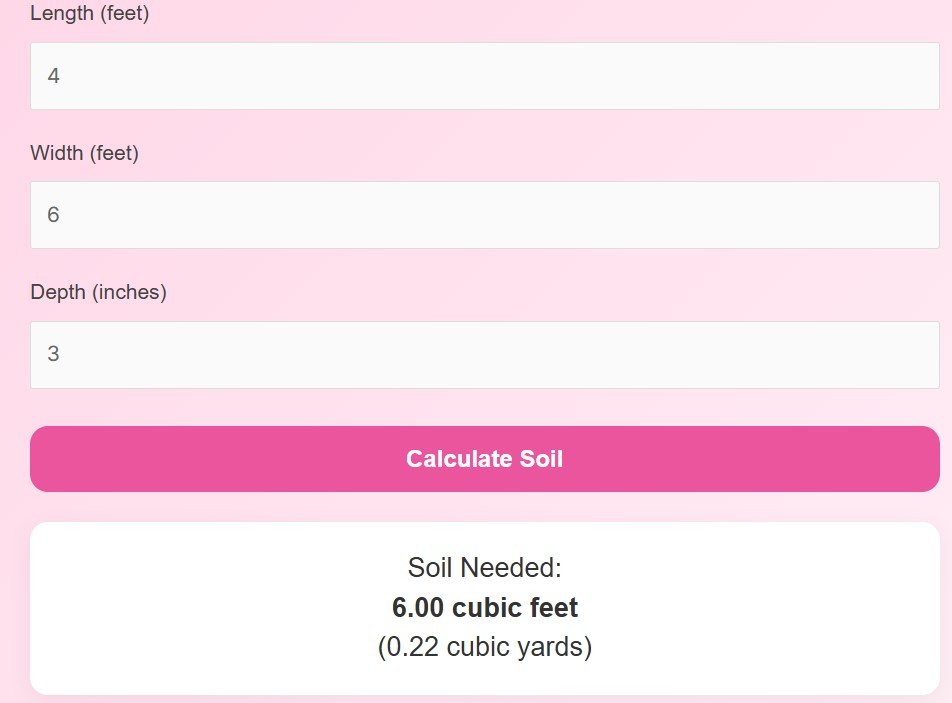
Typically, the calculator works by using three basic dimensions: length, width, and depth of the area where soil will be placed. Once these values are entered, the tool calculates the required soil volume in cubic feet, cubic yards, or cubic meters, depending on the measurement system used.
Gardeners, farmers, landscapers, and construction professionals frequently use soil calculators when planning outdoor projects. For example, if you are installing a raised garden bed, preparing soil for grass, or filling a planting area, the calculator helps determine the precise amount of soil needed.
Another benefit of using a soil calculator is its simplicity. Instead of performing manual calculations and conversions, the tool provides instant results with just a few inputs. This makes it especially useful for beginners or homeowners who want quick and reliable estimates.
In short, a soil calculator is an efficient digital tool designed to help users estimate soil volume accurately for gardening, landscaping, and construction purposes.
How to Use It
Using a soil calculator is very simple and usually requires only a few steps. The tool is designed so that anyone, even beginners, can calculate soil requirements quickly and easily.
1. Measure the Length
Start by measuring the length of the area where you plan to add soil. This could be the length of a garden bed, lawn section, or landscaping area. Enter this measurement into the calculator.
2. Measure the Width
Next, measure the width of the area. This helps the calculator determine the total surface area where the soil will be spread.
3. Enter the Soil Depth
The depth represents how thick the soil layer will be. For example, garden beds often require a depth of 6–12 inches depending on the type of plants.
4. Click the Calculate Button
After entering the measurements, simply click the Calculate button. The calculator will instantly process the data.
5. View the Result
The soil calculator will display the required soil volume, usually in cubic feet and cubic yards. This result helps you determine how much soil you should purchase.
Using this simple method ensures that your landscaping or gardening project runs smoothly without unnecessary delays or expenses.
Advantages of Using a Soil Calculator
Using a soil calculator offers several benefits, especially for homeowners, gardeners, landscapers, and contractors. Below are some key advantages of using this tool.
1. Saves Time
Manual calculations can take time and may involve complicated unit conversions. A soil calculator provides instant results, allowing users to quickly estimate soil requirements.
2. Prevents Overbuying or Underbuying
Buying too much soil leads to wasted money, while buying too little creates project delays. The calculator helps determine the correct quantity, reducing waste and saving costs.
3. Easy for Beginners
The tool is extremely user-friendly and requires only basic measurements. Even people with no technical or mathematical knowledge can use it easily.
4. Useful for Many Projects
A soil calculator can be used for various purposes, including:
Raised garden beds
Lawn leveling
Landscaping projects
Filling planters
Agricultural soil preparation
5. Improves Project Planning
Accurate soil estimation allows you to plan your project more efficiently. You can estimate the cost of soil, transportation, and labor in advance.
6. Reduces Calculation Errors
Manual calculations sometimes lead to mistakes, especially when converting units like inches to feet or feet to cubic yards. The calculator automatically performs these conversions.
Overall, using a soil calculator makes gardening and landscaping projects much easier and more efficient.
FAQs
1. What does a soil calculator measure?
A soil calculator measures the volume of soil required for a specific area based on its length, width, and depth.
2. Why is soil calculated in cubic yards or cubic feet?
Soil is measured in volume units because it fills a three-dimensional space. Cubic feet and cubic yards are common units used in landscaping and construction.
3. Can I use a soil calculator for raised garden beds?
Yes, soil calculators are commonly used to estimate soil for raised garden beds, planters, and landscaping areas.
4. Is the soil calculator accurate?
Yes, the calculator provides accurate estimates based on the measurements you enter. However, results may vary slightly depending on soil compaction and ground conditions.
5. What depth of soil is needed for gardening?
Most plants require 6 to 12 inches of soil, but some deep-rooted plants may need more.
6. Can this calculator be used for landscaping projects?
Absolutely. Landscapers frequently use soil calculators to estimate soil for lawns, gardens, flower beds, and land leveling.
Disclaimer
This soil calculator provides estimated results based on the measurements entered and should be used for informational purposes only.
Actual soil requirements may vary depending on soil compaction, ground conditions, and project specifications.