
Ramp Calculator
Easily calculate ramp slope, angle, and length with precision
What is Ramp Calculator?
A Ramp Calculator is a simple yet powerful tool designed to calculate the slope, angle, and length of a ramp based on the given height (rise) and base length (run). It is widely used in construction, architecture, and accessibility planning to ensure ramps are safe, functional, and compliant with standard guidelines.
Whether you are building a wheelchair ramp, designing a driveway slope, or planning an inclined surface, this calculator helps you quickly determine accurate measurements without manual calculations. It uses basic mathematical formulas such as the Pythagorean theorem and trigonometry to deliver instant and precise results.
A ramp’s slope is usually expressed as a ratio (like 1:12), which is especially important for accessibility standards. Using a Ramp Calculator ensures that your design meets safety requirements while saving time and reducing errors.
How to Use It
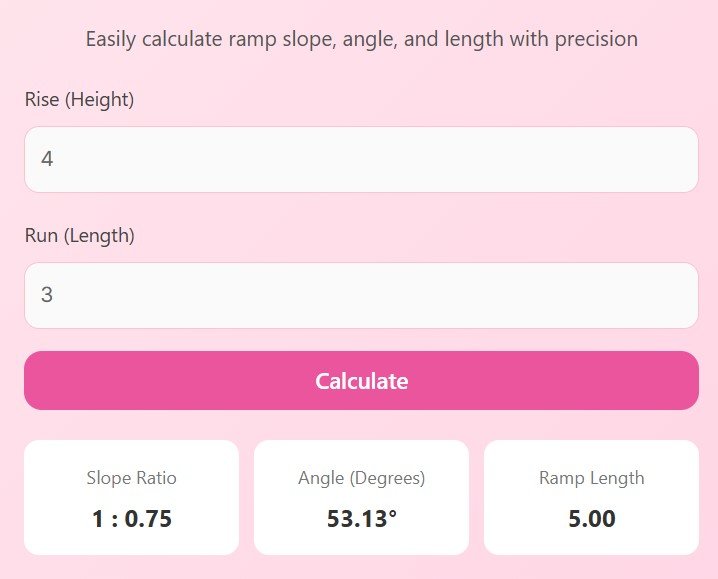
Using a Ramp Calculator is very easy, even for beginners. Follow these simple steps:
- Enter the Rise (Height):
Input the vertical height you want the ramp to reach. This can be in centimeters, meters, or inches depending on your requirement. - Enter the Run (Base Length):
Provide the horizontal distance over which the ramp will extend. - Click on Calculate:
Once you input the values, click the calculate button to get instant results. - View Results:
The calculator will display:- Slope ratio (e.g., 1:12)
- Ramp angle in degrees
- Total ramp length
This process eliminates the need for complex formulas and manual calculations, making it ideal for both professionals and beginners.
Advantages of Ramp Calculator
Using a Ramp Calculator offers several benefits, especially for construction and design projects:
1. Saves Time
Manual calculations can be time-consuming and prone to mistakes. This tool provides instant results within seconds.
2. High Accuracy
The calculator uses precise mathematical formulas to ensure accurate measurements, reducing the risk of design errors.
3. User-Friendly
Even if you have no technical background, you can easily use this tool with simple inputs and clear outputs.
4. Ensures Compliance
For accessibility purposes, ramps must follow specific slope guidelines (like ADA standards). This calculator helps ensure your ramp meets those requirements.
5. Versatile Applications
It can be used for:
- Wheelchair ramps
- Construction projects
- Driveways
- Loading ramps
- Industrial designs
6. Reduces Costly Mistakes
Incorrect ramp measurements can lead to safety hazards and extra expenses. This tool minimizes such risks by providing accurate data.
FAQs
1. What is the standard slope for a ramp?
The most commonly recommended slope for accessibility is 1:12, meaning for every 1 unit of height, you need 12 units of length.
2. Can I use this calculator for wheelchair ramps?
Yes, this calculator is perfect for designing wheelchair ramps and ensuring they meet accessibility standards.
3. What units can I use in the calculator?
You can use any unit (cm, meters, inches), but make sure both inputs (rise and run) are in the same unit.
4. How is ramp length calculated?
Ramp length is calculated using the Pythagorean theorem, which considers both height and base length.
5. Is this tool suitable for beginners?
Absolutely! The Ramp Calculator is designed to be simple and easy to use for everyone, including beginners.
Disclaimer
This tool provides approximate calculations for general use only and should not replace professional engineering advice.
Always consult a qualified professional to ensure compliance with local building codes and safety standards.