

Most adult women need roughly 1,600 to 2,400 calories a day to maintain their weight, and most adult men need roughly 2,000 to 3,000. Where you sit inside those ranges depends on your age, your size, and how much you move. To lose weight, your target sits below your maintenance number; to gain, above it. This guide shows you how your personal number is built, with worked figures you can check, so you can find your own target instead of borrowing a strangers.
How Your Personal Number Is Built

Your daily calorie need has two parts. The first is your basal metabolic rate, the energy your body uses at complete rest for breathing, circulation, and repair. The second is everything you do on top of that: work, walking, training, and daily movement. Add the two together and you get your maintenance level, the intake where your weight holds steady.
The standard estimating method is the Mifflin St Jeor equation, which builds the resting part from your sex, weight, height, and age, then scales it by an activity factor from 1.2 for a desk based life up to 1.9 for very heavy training or physical work. You do not need to run this by hand unless you want to. The worked table below shows what it produces for two typical people, and the pattern matters more than any single row: activity alone swings the answer by hundreds of calories.
Daily Calories for Two Sample People
Both examples are 30 years old. The woman weighs 65 kg and is 165 cm tall, with a resting rate of about 1,370 calories. The man weighs 80 kg and is 178 cm tall, with a resting rate of about 1,768 calories.
| Activity level | Woman, maintenance per day | Man, maintenance per day |
|---|---|---|
| Sedentary, desk job and no training | about 1,640 | about 2,120 |
| Lightly active, exercise 1 to 3 days a week | about 1,880 | about 2,430 |
| Moderately active, exercise 3 to 5 days a week | about 2,120 | about 2,740 |
| Active, hard exercise 6 to 7 days a week | about 2,360 | about 3,050 |
Read the table by finding the row that honestly matches your week, not the week you plan to start next month. If your job keeps you on your feet all day, you may belong one row higher than your training alone suggests, because daily movement counts as much as workouts.
Your own numbers will differ from these two people, and the fastest way to get them is to enter your own age, size, and activity once.
Adjust the Number for Your Goal

Maintenance is the middle setting. Your goal moves the target:
| Goal | Woman (moderate example) | Man (moderate example) |
|---|---|---|
| Lose weight steadily | about 1,620 a day | about 2,240 a day |
| Maintain weight | about 2,120 a day | about 2,740 a day |
| Gain weight gradually | about 2,370 to 2,620 a day | about 2,990 to 3,240 a day |
The losing targets subtract about 500 calories a day from maintenance, which lines up with losing roughly 1 lb a week, a pace most people can sustain. The gaining targets add 250 to 500, enough to gain slowly without piling on fat.
Two safety points belong in every calorie discussion. First, general clinical guidance says women should not eat below about 1,200 calories a day, or men below about 1,500, without medical supervision, because covering basic nutrition gets very hard under those floors. These floors are limits, not targets. Second, losing faster than about 1 to 2 lb a week is rarely a good trade: hunger rises, training suffers, and more of the loss comes from muscle, which then lowers your maintenance further.
Why Your Number Is Not Your Friend’s Number

Two people of the same weight can legitimately need calories hundreds apart. The main reasons:
- Age. Resting metabolism eases down with age, partly from muscle loss, so a 55 year old usually needs less than a 25 year old of the same size.
- Muscle. Muscle tissue burns more energy than fat tissue at rest, so two people at 80 kg can have different resting rates.
- Daily movement. Steps, standing, physical work, and even fidgeting add up quietly. This hidden movement is the biggest reason identical looking people have different real needs.
- History. After long dieting, the body can adapt and run slightly leaner than formulas expect at the same weight.
This is why every figure in this article is an estimate to start from. If your weight holds steady for a few weeks at a given intake, that intake is your real maintenance, whatever any table says. If you want to pin that number down precisely, our TDEE calculator estimates your total daily burn from the same method used above.
A Short Note on Workout Calories
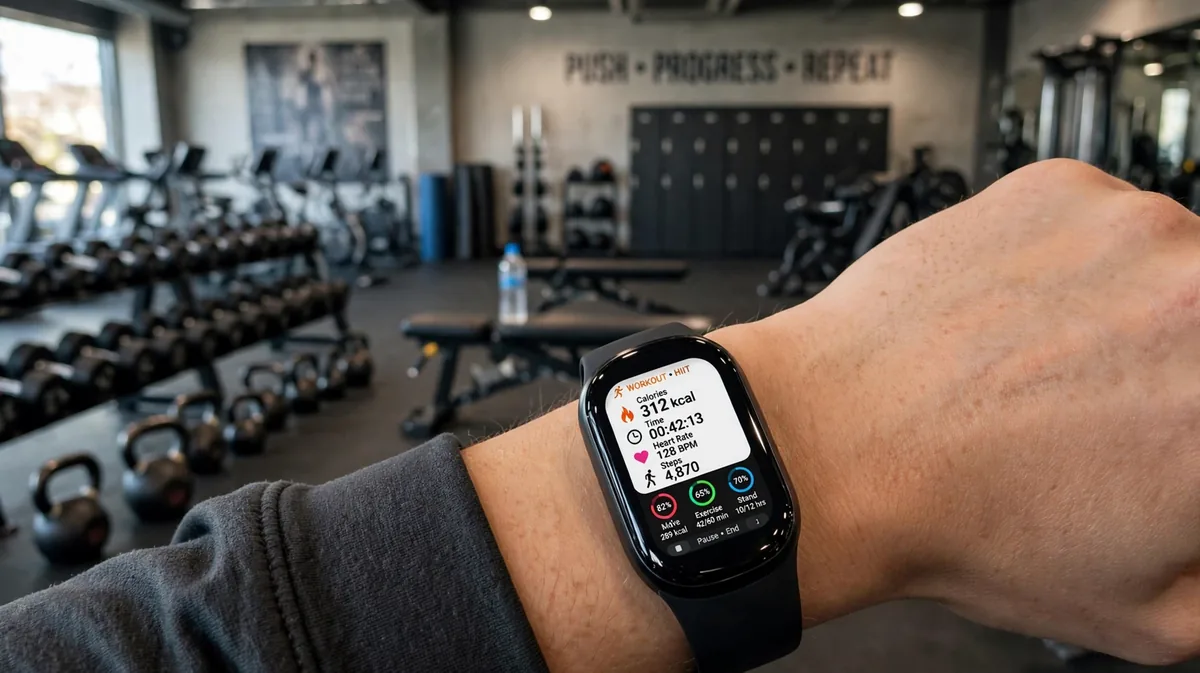
Treadmill screens and fitness trackers often report exercise burn generously, sometimes well above reality. If your activity level already reflects your training, eating back every displayed workout calorie can quietly erase a weight loss deficit. A calmer approach: set your daily target from your overall activity, keep it steady across the week, and judge the result by your weight trend over two to three weeks. Adjust by 100 to 200 calories if the trend is not moving the way your goal requires.
Frequently Asked Questions
How many calories should I have to lose weight?
Take your maintenance number and subtract about 500 calories a day for a steady loss of roughly 1 lb a week, or subtract about 250 for a gentler pace. Keep the result above the safety floors of about 1,200 calories for women and 1,500 for men unless a professional is supervising you, and expect to recalculate as you lose weight, because a lighter body needs fewer calories.
Is 1,500 calories a day enough?
For some smaller, sedentary women it can be a reasonable weight loss intake, because it may sit a few hundred below their maintenance. For most men and for active women it is too low as a long term intake and risks muscle loss and nutrient gaps. Whether 1,500 is enough depends entirely on your maintenance: it is a sensible target only if your maintenance is around 1,800 to 2,000.
Should I eat more on workout days?
You can, but you do not have to. Most people do better with one steady daily target built from their weekly activity level, because it is simpler to follow and the weekly total is what drives weight change. If a long or very hard session leaves you genuinely depleted, adding a modest extra meal of protein and carbohydrate that day is reasonable.
How many calories should a teenager have?
Teenagers are still growing, so their needs run higher relative to their size and vary a lot with growth and sport. Adult formulas and adult deficit advice do not apply to them. A teenager who is concerned about weight should be guided by a parent and a health professional rather than by a calorie target from a general guide like this one.
Conclusion
How many calories you should have is a personal number built from your resting metabolism and your activity, then adjusted for your goal. Start from the ranges and the worked table here, set your target about 500 below maintenance to lose or a few hundred above to gain, respect the safety floors, and let your own weight trend over a few weeks confirm whether the number is right for your body.
Disclaimer: This tool is for educational and informational purposes only and is not a substitute for professional medical advice, diagnosis, or treatment. Always consult a qualified healthcare professional with any questions about your health.

Taha Rasheed is a content researcher and editor at UnlimitedCalculators.com. He is passionate about making everyday calculations easier and more accessible through simple, practical, and easy-to-understand online tools.
He focuses on researching calculation methods, creating helpful content, and improving the clarity and usability of calculator resources across different topics, including mathematics, finance, education, health, and everyday calculations.
At UnlimitedCalculators.com, Taha aims to provide useful, informative, and user-friendly resources that help visitors understand calculations and make everyday tasks simpler.