
Cost Of Capital Calculator
Quickly calculate your Weighted Average Cost of Capital
Your WACC:
Cost of Capital Calculator: Calculate Your WACC Easily and Accurately

In today’s competitive business world, understanding the cost of capital is crucial for making informed financial decisions. A Cost of Capital Calculator helps businesses, investors, and students calculate the Weighted Average Cost of Capital (WACC) quickly and with accuracy. This tool provides a clear picture of how much a company spends to finance its operations through equity and debt. By using it, users can easily evaluate investment risks and expected returns. Overall, the calculator simplifies complex financial calculations, making decision-making faster and more reliable.
Introduction

In the world of business and finance, making informed decisions is essential for long-term success. Every business owner, investor, or financial professional should understand the cost of capital, as it plays a key role in strategic planning and investment evaluation.
Cost of capital represents the average rate a company must pay to finance its operations through equity (shareholders’ funds) and debt (loans or bonds). It shows the true cost of obtaining funds and helps evaluate investment opportunities, funding strategies, and overall financial health.
A Cost of Capital Calculator simplifies this process by quickly computing the Weighted Average Cost of Capital (WACC). This gives users a clear picture of how much a company pays for its financing, enabling smarter decisions, optimized capital structure, and sustainable business growth.
Understanding the Cost of Calculator: A Complete Guide

The Cost of Capital Calculator is a financial tool that calculates the average cost of capital a company pays for its funding, considering both equity (money from shareholders) and debt (loans or bonds). It provides a clear picture of a company’s Weighted Average Cost of Capital (WACC), making it an essential tool for businesses and investors. By using this calculator, you can make informed decisions about investments, budgeting, and project evaluation. It simplifies complex financial calculations and ensures that your capital allocation aligns with long-term strategic goals. Understanding how it works helps businesses reduce financing costs, manage risk, and maximize returns efficiently.
Cost of Calculator Formula, Uses, Explained
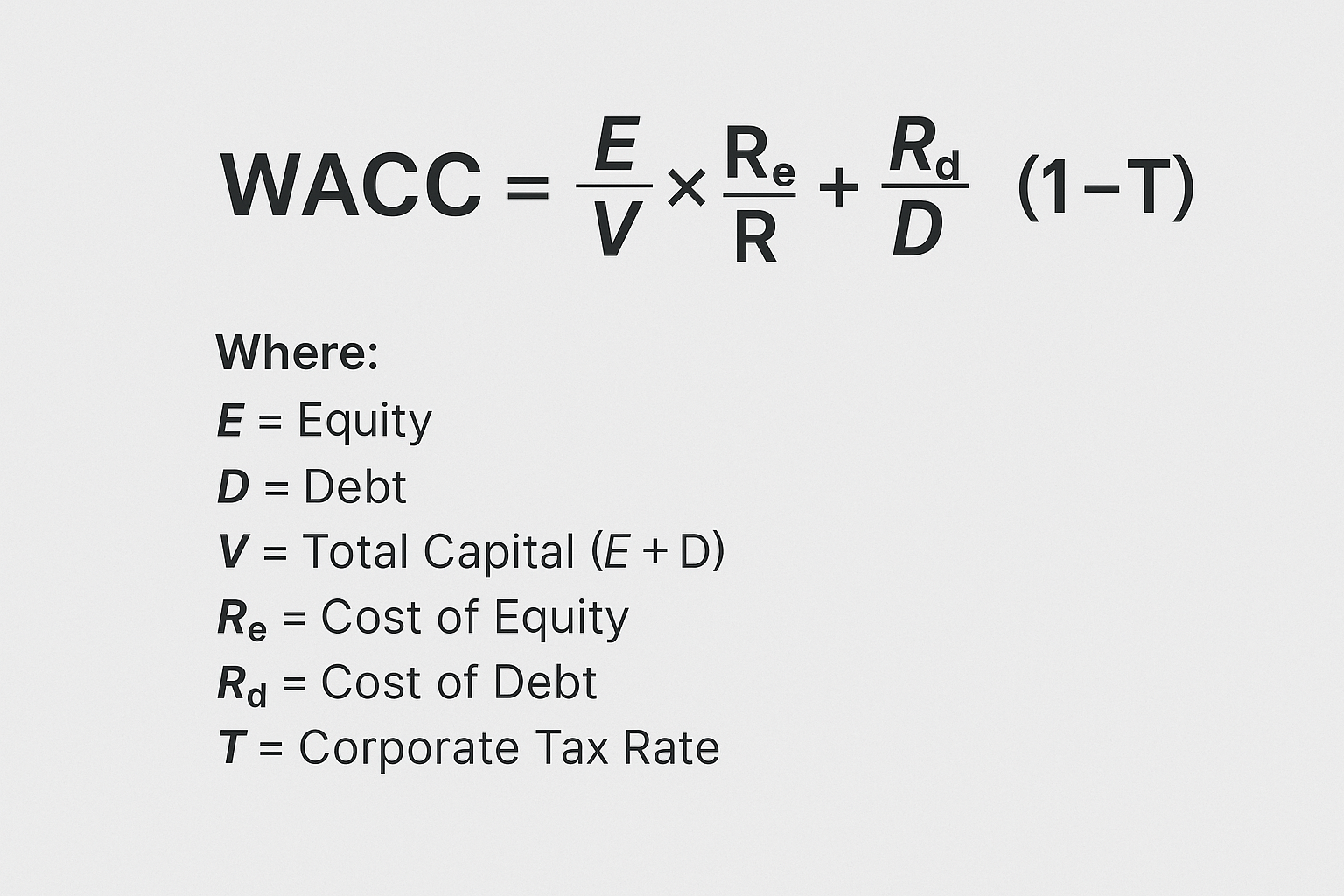
Formula Explanation:
The WACC formula calculates how much it costs a company to raise money through equity and debt. It blends the cost of equity and the after-tax cost of debt based on their share in the total capital. By using this formula, businesses understand the true financial burden of funding their operations. It also highlights how taxes reduce the effective cost of debt. Overall, it helps companies measure the minimum return needed to remain profitable and financially secure.
Uses:
WACC is used by businesses to check whether a new project or investment will be profitable. It helps compare expected returns with the cost of financing to avoid risky or unproductive decisions. Financial analysts use WACC to estimate a company’s value and assess investment opportunities. It also acts as a benchmark rate when evaluating mergers, expansions, or project feasibility. In simple terms, WACC guides businesses toward smarter financial planning.
Key Features and Advantages of the Cost of Calculator

Understanding the cost of capital is essential for making smart financial decisions. The Cost of Calculator simplifies this process, making it easier for businesses and individuals to analyze their funding structure. By providing accurate calculations and clear insights, it helps users plan effectively and make informed investment choices.
Key Feature:
The Cost of Calculator comes with several important features that enhance financial analysis. It accurately calculates the weighted average cost of capital (WACC) by integrating both equity and debt components. The tool has a user-friendly interface, making data input and interpretation simple. Additionally, it supports scenario analysis, allowing users to evaluate the potential impact of different financing strategies and optimize their funding decisions.
Advantages:
Using the Cost of Calculator offers numerous advantages for businesses and investors. It saves time by automating complex calculations and reduces errors compared to manual methods. The insights provided help improve financial planning, assess risks, and optimize capital structure for better returns. Overall, it empowers users to make informed investment decisions and enhance strategic financial management.
Why the Cost of Calculator Matters in Financial Decisions

1. Compare Investment Opportunities
Understanding the cost of capital helps businesses compare different investment options more accurately. It shows which projects can generate returns higher than their financing cost. This ensures companies choose investments that add real value and avoid low-return opportunities.
2. Optimize Financing Mix
Knowing the cost of capital helps companies decide the right balance between equity and debt. It highlights which funding option is more affordable and beneficial. This leads to a stronger capital structure and improved long-term financial stability.
3. Make Data-Driven Financial Decisions
The cost of capital gives a clear financial benchmark for evaluating business decisions. It helps managers select profitable projects based on facts, not assumptions. This reduces risk and supports smarter long-term planning.
4. Assess Risk Versus Return
Understanding capital cost helps businesses judge whether expected returns justify the risks involved. It prevents choosing projects that may destroy value. This improves financial discipline and supports balanced, sustainable growth.

How to Calculate Cost of Capital (WACC) Easily
Using a Cost of Capital Calculator simplifies the process
Enter Cost of Equity (%) — e.g. 12
Enter Cost of Debt (%) — e.g. 8
Enter Total Equity & Debt Amounts — e.g. 200000 and 100000
Enter Tax Rate (%) — e.g. 30
Click “Calculate” to see your Cost of Capital (WACC)
See result and chart — it shows how much your capital really costs!
This method saves time, effort, and reduces human errors, making financial calculations accessible for beginners and professionals alike.
Real-Life Importance of Cost of Calculator in Business

Investment Decisions:
Companies use WACC to evaluate potential projects and investments.
Projects with expected returns higher than the company’s WACC are usually considered profitable and worth pursuing.
By comparing returns against WACC, businesses can prioritize projects that maximize shareholder value.
This ensures resources are allocated efficiently and risk is managed effectively.
Valuation of Company:
WACC plays a crucial role in valuing a company and assessing shareholder wealth.
By incorporating the cost of debt and equity, it helps calculate the enterprise value accurately.
Investors and management can use this information to understand the company’s financial health and make strategic decisions.
It provides a clear benchmark for growth and long-term planning.
Performance Benchmark:
WACC serves as an important performance benchmark for companies.
It helps evaluate how efficiently a business is utilizing its capital to generate returns.
By measuring actual returns against WACC, management can identify areas for improvement and optimize resource allocation.
This promotes better financial discipline and enhances overall profitability.
Investor Insight:
For investors, knowing a company’s WACC is essential for assessing risk and profitability.
It helps determine whether investing in a particular business will yield returns above the cost of capital.
This insight guides investment decisions and ensures funds are allocated to ventures with the highest potential for growth.
WACC thus acts as a critical tool for informed and strategic investing.
Common Mistakes Businesses Make with Cost of Capital

Businesses often make critical mistakes when dealing with the cost of capital. Many underestimate the true cost of debt or overestimate the expected return on equity, leading to flawed investment decisions.
Ignoring market fluctuations and failing to regularly update WACC can result in misallocation of resources. Some companies rely too heavily on one type of financing, rather than optimizing a balanced capital mix. These errors can reduce profitability, increase financial risk, and hinder long-term growth. Regular analysis and careful planning are essential to avoid these common pitfalls.
Conclusion
A Cost of Capital Calculator is more than just a number—it’s a vital tool for financial planning and strategic decision-making. By understanding your WACC, you can make smarter investment choices, optimize your funding, and improve overall business efficiency. Whether you’re a student, investor, or business owner, using this calculator ensures you are financially informed and prepared.
Disclaimer
This article and the Cost of Capital Calculator are intended for educational and informational purposes only. The results should not be considered financial advice. For personalized financial guidance, consult a professional financial advisor before making investment or business decisions.