
Introduction
Studying for long hours doesn’t always mean better results. What truly matters is how smartly you plan your study time. When students organize their tasks, break down topics, and follow a structured routine, their productivity increases naturally without stress or burnout.
In this guide, you’ll learn simple yet powerful planning techniques that help you study smarter, stay focused, and make real progress every day.
1. Understand Your Current Study Habits

source:coursera
Understanding your current study habits is the first step toward improving your learning strategy. By observing how you spend your study time, you can identify what works and what doesn’t. This helps you recognize patterns, such as when you are most focused or which activities distract you the most.
Keeping track of your daily routine gives you a clear picture of your strengths and weaknesses. You can see which subjects or tasks take longer than expected and which study methods help you retain information better. This awareness is essential for making effective changes.
Once you understand your habits, you can create a study plan tailored to your needs. By building on your strengths and addressing weaknesses, you can improve your productivity, stay consistent, and make the most of your study hours.
Ask yourself:
- Do you spend too long on one subject?
- Do you get distracted easily?
- Do you plan your day or study randomly?
- Do you start studying only when exams are close?
Once you identify your weak points, planning becomes easier and more effective.
2. Create a Realistic Daily Study Schedule

Creating a realistic daily study schedule helps you organize your time effectively and reduces stress. Instead of trying to study everything at once, you divide your tasks into manageable portions that fit naturally into your day. This approach makes studying more structured and less overwhelming.
A good schedule balances study, breaks, and other daily activities. Allocating specific times for each subject or task ensures that you give attention to all areas without overloading yourself. It also allows you to focus better during each study session, increasing productivity.
By following a realistic schedule consistently, you develop discipline and build a steady learning routine. This helps you stay on track with your goals, track your progress, and maintain a healthy balance between studying and personal time.
Tips for making a solid study plan:
- Set a fixed time for studying each day
- Keep your sessions focused (25–45 minutes)
- Add small breaks to refresh your mind
- Prioritize difficult subjects first
- Avoid multitasking
A realistic schedule helps you stay consistent without feeling overwhelmed.
3. Break Large Topics into Smaller, Manageable Tasks
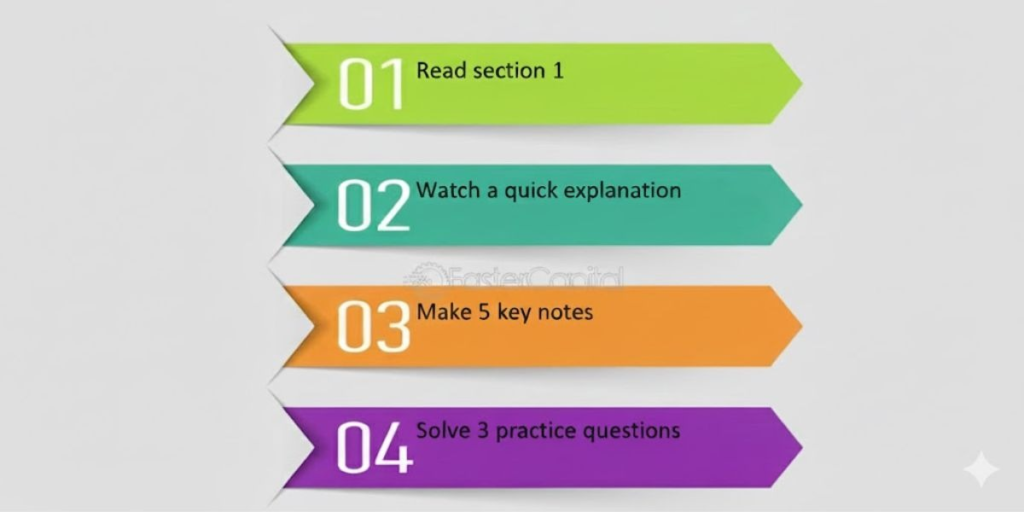
Breaking large topics into smaller, manageable tasks makes studying less intimidating and more achievable. When you divide a big subject into smaller sections, it becomes easier to focus on one part at a time rather than feeling overwhelmed by the entire topic.
Completing each small task gives a sense of accomplishment and boosts motivation. It also helps you identify which areas need more attention, so you can plan your revision more effectively.
This approach allows you to track progress clearly and reduces stress. By tackling topics step by step, you can maintain consistency in your studies and improve understanding, retention, and overall learning efficiency.
Instead of: Study entire Biology Chapter 5
Try:
- Read section 1
- Watch a quick explanation
- Make 5 key notes
- Solve 3 practice questions
Small steps build momentum and make studying less stressful.
4. Use Time-Blocking for Better Focus
source:FasterCapital
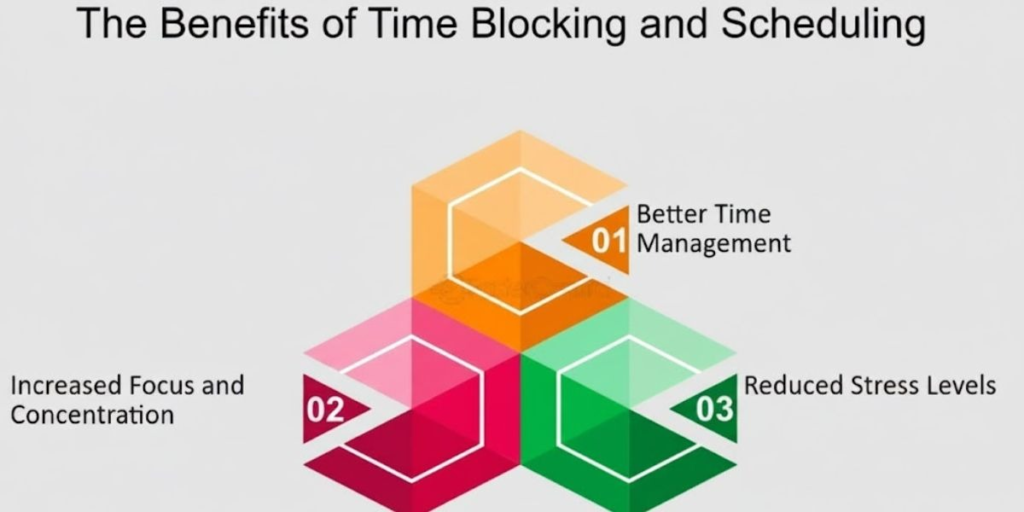
Using time-blocking for your studies is a great way to improve focus and manage time efficiently. By assigning specific subjects or tasks to fixed time slots, you always know what to study and when, which reduces confusion and wasted time. This makes your study sessions more organized and purposeful.
Time-blocking also enhances concentration because each slot has a clear goal. Focusing on one topic at a time allows for better understanding and retention, while short breaks between blocks keep your mind fresh and prevent burnout.
Additionally, time-blocking helps you prioritize subjects based on importance and difficulty. Scheduling challenging topics during your most productive hours ensures consistency, reduces distractions, and makes your study routine more effective overall.
Example:
- 4:00–4:40 PM → Chemistry formulas
- 4:45–5:30 PM → Math practice
- 7:00–7:45 PM → English reading
- 8:00–8:15 PM → Revision
This method gives your study sessions structure and removes guesswork, improving productivity.
5. Know Your Peak Productivity Hours

Knowing your peak productivity hours is essential for studying effectively. Every student has certain times of the day when their mind is most alert, focused, and capable of absorbing information. Identifying these hours helps you schedule your most challenging or important tasks when your brain works at its best.
Studying during your peak hours allows you to learn faster and retain information more efficiently. Trying to tackle difficult topics during low-energy periods can lead to frustration, decreased focus, and wasted effort. By aligning study sessions with your natural energy patterns, you make the most of your time.
Once you know your productive hours, you can plan your daily routine accordingly. Schedule high-priority subjects during peak times and reserve lighter or revision tasks for other periods. This approach ensures consistency, maximizes efficiency, and helps maintain both focus and motivation throughout your study sessions.
You may study better:
- Early morning
- Late evening
- After lunch
- Late night (if you are a night learner)
Find your best time and plan your hardest subjects during those hours.
6. Add Smart Tools to Your Study Routine

Adding smart tools to your study routine can make learning more efficient and organized. Tools like digital planners, note-taking apps, and flashcard systems help you keep track of tasks, deadlines, and important concepts without relying solely on memory. They save time and allow you to focus more on understanding the material rather than managing your study process.
Smart study tools also enhance retention and engagement. For example, interactive apps, quizzes, and educational videos can make difficult topics easier to grasp. Using these tools regularly can turn routine studying into a more engaging and productive experience, keeping motivation high.
Moreover, technology allows you to customize your learning. You can set reminders, track progress, and identify weak areas with analytics tools. By integrating smart tools into your routine, you create a structured, flexible, and effective study plan that adapts to your needs and maximizes your results.
You can use:
- Flashcards apps
- Note-making tools
- Study planners
- Reminder apps
Insert Your Calculator Here: Study Time Calculator Section
This section is the perfect place for your calculator.
You can add a simple heading like:
Calculate Your Ideal Daily Study Hours
Use this calculator to find out how many hours you should study each day based on your goals and available time.
(Insert Study Time Calculator here)
This gives value and naturally integrates your tool without forcing the user to click.
7. Revise Smartly, Not More

Source:Mubeen Akbar-Medium
Revision is most effective when done smartly, rather than just increasing the number of hours spent. Instead of mindlessly rereading notes, focus on understanding key concepts and identifying areas where you are weak. This approach saves time and ensures that your effort leads to better retention.
Techniques like summarizing information, creating mind maps, or practicing with quizzes can make revision more efficient. By actively engaging with the material, you reinforce learning and recall it more easily during exams.
The goal is quality over quantity. Short, focused, and regular revision sessions are far more productive than long, passive study marathons. Smart revision helps you retain information longer, reduces stress, and improves overall performance.
.
Try:
- Summarizing topics in your own words
- Solving practice questions
- Reviewing mistakes
- Using past papers
- Teaching someone else
Effective revision strengthens memory and clears doubts quickly.
8. Avoid Distractions and Manage Your Environment

Source:Clockwise
Creating a study-friendly environment is key to effective learning. Avoiding distractions like phones, social media, or noisy surroundings helps you focus better and makes your study time more productive. Even small interruptions can break your concentration and make it harder to retain information.
Organizing your study space also plays a big role. A clean, well-lit, and comfortable area signals your brain that it’s time to concentrate. Keeping all necessary materials within reach reduces unnecessary breaks and keeps your workflow smooth.
Managing your environment goes hand-in-hand with self-discipline. By controlling external distractions and maintaining a consistent study space, you can stay focused for longer periods, improve efficiency, and make your study sessions more effective overall.
Keep it:
- Quiet
- Clean
- Well-lit
- Organized
Turn off unnecessary notifications and keep your study materials within reach.
9. Track Your Progress Weekly

Tracking your progress weekly helps you stay aware of how much you’ve accomplished and what still needs attention. By reviewing your study goals regularly, you can see which topics you’ve mastered and which areas require more focus. This prevents last-minute cramming and keeps your preparation on track.
Keeping a weekly record also motivates you. Seeing consistent progress, even in small steps, boosts confidence and encourages you to maintain your routine. Simple tools like checklists, journals, or apps can make tracking easy and organized.
Additionally, weekly tracking allows you to adjust your study plan as needed. If certain methods aren’t working or you’re falling behind in some subjects, you can make timely changes. This approach ensures that your study strategy remains effective and continuously improves your learning outcomes.
Ask yourself:
- Did I complete my study goals this week?
- Which subjects need more attention?
- Am I following my schedule?
Tracking progress keeps you motivated and on the right path.
10. Give Importance to Sleep and Relaxation

Giving importance to sleep and relaxation is crucial for effective learning. A well-rested brain absorbs and retains information much better than a tired one. Skipping sleep or overloading yourself with study hours can reduce concentration, memory, and overall productivity.
Relaxation breaks during study sessions also help refresh your mind. Short breaks, stretching, or a few minutes of meditation can reduce stress and prevent burnout. This balance keeps your energy levels steady and improves focus when you return to studying.
By prioritizing sleep and relaxation, you support both your physical and mental health. Consistent rest allows you to approach your studies with a clear mind, retain information more efficiently, and maintain long-term academic performance without feeling overwhelmed.
Aim for:
- 7–8 hours of sleep
- Short breaks during study
- A little exercise
- Relaxation time with friends or family
A fresh mind learns faster and performs better.
FAQs
1. How many hours should I study daily?
It depends on your grade, goals, and routine. Most students study 2–4 hours on normal days and longer during exams.
2. Is studying at night good?
Yes,if it suits you. Choose your natural productivity hours.
3. How can I avoid procrastination?
Break tasks into smaller steps and use time-blocking.
4. What is the most effective study method?
Active recall + spaced repetition + consistent revision.
5. How do I make a realistic study plan?
Start small, focus on priorities, and leave room for flexibility.
.
https://shorturl.fm/ZgNfw
https://shorturl.fm/z5dvA
https://shorturl.fm/jReKd